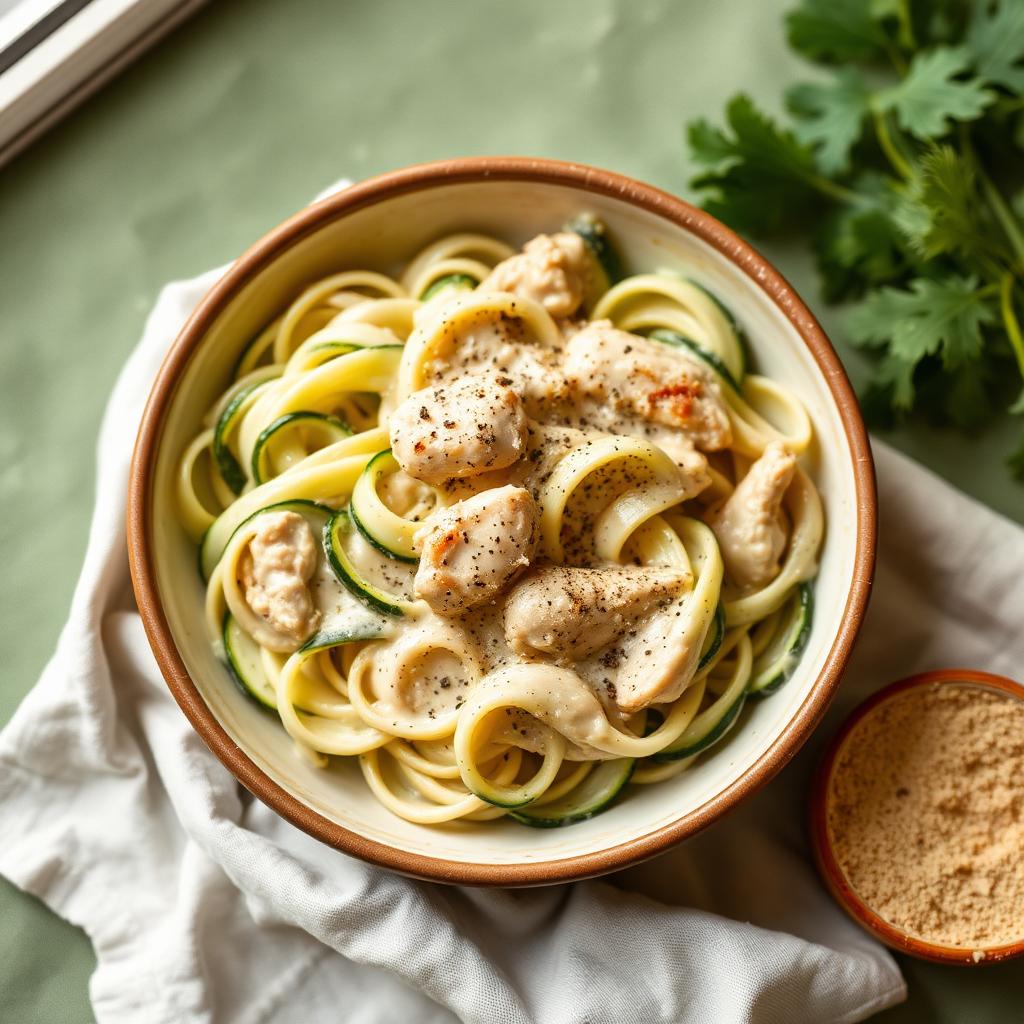
Creamy Keto Chicken Alfredo with Zucchini Ribbons
A silky, restaurant-style alfredo built on a real Parmesan-and-cream sauce, served over tender zucchini ribbons instead of pasta. Twenty-five minutes, one skillet, and just 6 g net carbs per generous serving — every bit as decadent as the original with none of the post-meal crash.
By Keto Kitchen Hub Editorial · Published July 20, 2026
- Prep
- 10 min
- Cook
- 15 min
- Total
- 25 min
- Servings
- 4
- Net Carbs
- 6 g
Instructions
- 1
Salt the zucchini ribbons in a colander and let them drain for 10 minutes while you cook the chicken. Press gently with paper towels to remove excess water — this is the single most important step to avoid a watery sauce.
- 2
Season chicken generously with salt, pepper, and Italian seasoning. Melt 1 tbsp butter in a large skillet over medium-high heat and sear chicken 3–4 minutes per side until golden and cooked to 165°F (74°C). Transfer to a plate.
- 3
Reduce heat to medium. Add remaining butter and garlic; sauté 30 seconds until fragrant but not browned.
- 4
Pour in cream and cream cheese, whisking until smooth. Simmer gently 3–4 minutes until slightly thickened.
- 5
Turn heat to low. Add Parmesan a handful at a time, whisking constantly until glossy. Grate in nutmeg and adjust seasoning.
- 6
Return chicken to the pan with any juices, then fold in zucchini ribbons. Toss for 60–90 seconds — just enough to warm through, not cook. Finish with parsley and extra Parmesan at the table.
Nutrition (per serving)
- Calories
- 545
- Fat
- 39 g
- Protein
- 42 g
- Total Carbs
- 8 g
- Fiber
- 2 g
- Net Carbs
- 6 g
Values are estimates calculated from typical ingredient databases. See our disclaimer.
Storage
Store leftover alfredo in an airtight container in the fridge for up to 3 days. The sauce will thicken as it cools; reheat gently on the stovetop with a splash of cream or bone broth to loosen. Do not freeze — cream-based sauces separate and become grainy after thawing.
Expert tips
- Always grate Parmesan yourself from a block. Pre-shredded cheese contains cellulose anti-caking agents that prevent a smooth emulsion.
- Never boil the cream — a low simmer keeps the sauce silky. Boiling causes butterfat to separate.
- For an extra decadent version, swap ¼ cup of the cream for mascarpone.
Frequently asked questions
+How many net carbs are in zucchini noodles?
One medium zucchini has about 4 g total carbs and 1 g fiber, for roughly 3 g net carbs. It is one of the lowest-carb pasta swaps available.
+Can I use rotisserie chicken?
Yes — skip the first two steps and add 3 cups of shredded rotisserie chicken to the finished sauce. Total time drops to 15 minutes.
+Is heavy cream keto?
Yes. Heavy whipping cream is roughly 0.4 g carbs per tablespoon and 5 g of fat, making it a keto staple.
+What can I use instead of zucchini?
Shirataki noodles (0 g net carbs), palmini heart-of-palm pasta, or spaghetti squash all work beautifully with this sauce.
Everything you need to know
In-depth guide · reviewed by our editorial team · approx. 15 min read
Why This Is the Keto Chicken Alfredo You've Been Looking For
Alfredo sauce is one of those dishes that seems tailor-made for a ketogenic kitchen. At its Roman origins, it was nothing more than butter, aged Parmigiano-Reggiano, and the residual starch water from fresh pasta — a two-ingredient emulsion so rich it was reserved for pregnant wives and homesick tourists. The American version added heavy cream, more cheese, and a heaping tangle of fettuccine. Strip out the noodles, keep the fat, and you're left with a sauce that fits inside a strict macro window without a single compromise on flavor.
What ruins most keto alfredo recipes is not the sauce — it's the vegetable underneath it. Watery zucchini, undercooked spaghetti squash, or gummy shirataki turn a five-star sauce into a five-minute regret. This recipe solves that problem by salt-draining the zucchini for ten minutes before it ever touches the pan. Ten minutes is not optional; it's the difference between a silky, restaurant-plated bowl and a broth-thin puddle at the bottom of your dish. Zucchini is 95% water by weight, and when you toss those uncooked ribbons into a hot cream sauce, that water leaches out in seconds. Salt draws it out first, on your counter, where it belongs.
The second thing that separates this recipe from the bland keto alfredos crowding Pinterest is respect for the sauce itself. Real alfredo is an emulsion — a stable suspension of fat (butter, cream, cheese fat) in water (whey, cream serum). Emulsions break with high heat, aggressive stirring, or the wrong cheese. We work around all three by lowering the heat before the Parmesan goes in, whisking cheese in slowly one handful at a time, and using freshly grated cheese instead of the pre-shredded stuff coated in cellulose.
The Macros: How This Fits a Ketogenic Day
Per generous serving, this dish delivers approximately 545 calories, 39 grams of fat, 42 grams of protein, 8 grams of total carbohydrate, 2 grams of fiber, and 6 grams of net carbohydrate. If you're running a standard ketogenic ratio of 70% fat, 25% protein, and 5% carbs, those numbers land almost dead-center — 64% of calories from fat, 31% from protein, and 5% from net carbs.
For anyone tracking protein separately — and you should, because muscle protein synthesis is what allows a ketogenic diet to preserve lean mass — 42 grams in a single meal is right in the sweet spot. Recent leucine-threshold research suggests adults over 40 need at least 30 grams of high-quality protein per meal to fully activate mTOR-driven muscle repair. One bowl of this alfredo does the work of a whey shake plus a chicken breast, without spiking insulin or interrupting ketosis.
The 6 grams of net carbs come almost entirely from the zucchini (about 3 g), the aromatics (garlic and onion add roughly 1 g), and the small amount of lactose in cream and cream cheese (about 2 g). If you're on a strict therapeutic keto protocol targeting under 20 g net carbs daily, this dish uses roughly a third of your allowance while filling half of your day's calories.
Ingredient Deep-Dive: Why We Chose Each One
Chicken breast is the workhorse here, but chicken thighs are a legitimate — and often better — substitution. Thighs are higher in fat (which shifts macros in a keto-friendly direction), more forgiving to cook, and richer in flavor. The reason we specified breast is portability: leftovers reheat more evenly, and the higher protein-to-fat ratio pairs cleanly with a very rich sauce. If you're new to keto and worried about hitting protein targets without over-eating, use breast. If you're a keto veteran looking to hit fat macros faster, use thighs.
Heavy whipping cream is not the same as half-and-half, whipping cream, or 'heavy cream' from every brand. You want the 36% milkfat version — sometimes labeled 'heavy whipping cream.' Half-and-half has too much lactose and won't reduce properly. UHT (ultra-high-temperature) cream in shelf-stable boxes contains stabilizers that can break under heat; splurge for the fresh dairy-case version if your budget allows.
Parmigiano-Reggiano is the DOP-protected Italian original aged at least 24 months. Its lower moisture content is the reason it melts into a smooth sauce instead of turning into stringy clumps like young mozzarella. American-made 'Parmesan' — especially the pre-grated green-can stuff — is coated in cellulose (a wood fiber that resists melting) and often stretched with cheaper cheeses. The pre-shredded plastic-bag versions are only marginally better. Buy a wedge, grate it yourself, and thank yourself later.
Cream cheese might raise an eyebrow — traditional alfredo contains none — but two ounces adds structural insurance. Cream cheese is 33% fat and stabilizes with heat instead of breaking like cream alone can. It also adds a subtle tang that mimics the acidity of the whey water Italian nonnas rely on. If you're a purist, skip it and rely on the cheese for emulsion; you'll get a thinner but still delicious sauce.
Nutmeg — grated fresh from a whole seed if possible — is the invisible star ingredient. A quarter teaspoon is not a garnish; it's what makes people ask you what your secret is. It has a savory-sweet warmth that plays against dairy fat in a way that has been used in French béchamels, Italian besciamella, and Greek moussaka for centuries. Pre-ground nutmeg loses 60% of its aroma within three months of opening; if yours has been in the cabinet since the pandemic, buy fresh.
The Technique: Building an Emulsion That Doesn't Break
Alfredo sauce fails for one of three reasons: too much heat, too much stirring, or the wrong cheese. All three cause the fat in the sauce to separate from the water and re-form as greasy pools on the surface. Once that happens, the emulsion is broken — you can whisk furiously, but you cannot un-break a broken emulsion without adding fresh cream and re-emulsifying with a blender.
The heat rule is simple: after the cream simmers and reduces, drop the burner to its lowest setting before any cheese enters the pan. Cheese proteins denature and re-form around 175°F (79°C); above 200°F they curl up into stringy clumps. A gentle low-heat pan lets the cheese slowly melt into the cream without ever crossing that threshold.
The cheese enters in small handfuls, whisked in one at a time, never dumped. Each handful should fully disappear into the sauce before the next joins it. This is the same technique used to build a proper Roman cacio e pepe — the sauce is 'mounted' with cheese in stages so the emulsion stays intact. Rush this step and you'll have a stringy mess that no amount of stirring can rescue.
The zucchini goes in absolute last — 60 to 90 seconds at most. You want it warmed through and lightly softened, not cooked to translucency. Overcooked zucchini releases its residual water into the sauce and thins it out. If your ribbons are thick, blanch them for 30 seconds in salted boiling water before draining and adding to the pan; that pre-shock removes moisture without losing texture.
Substitutions and Variations
For a dairy-free version, replace the cream with full-fat coconut cream and the Parmesan with a combination of nutritional yeast (¾ cup) and cashew cream (¼ cup). The flavor profile shifts noticeably — you'll get more tang, less butteriness — but the macros stay similar and it's shockingly good. Add a squeeze of lemon juice to brighten it.
For a lower-carb version (about 4 g net per serving), skip the yellow onion entirely and reduce garlic to two cloves. Onion is the single biggest carb contributor after zucchini; removing it saves nearly 2 g without sacrificing much depth.
For a higher-protein version aimed at athletes or people rebuilding muscle mass, add ½ cup unflavored whey protein isolate whisked into the cream before it simmers. This bumps protein to 55 g per serving without altering flavor.
For a spicier version, add ¼ tsp red pepper flakes to the garlic step and finish with a drizzle of chili crisp oil. The heat cuts through the richness beautifully.
Shirataki fettuccine can replace zucchini for a truly zero-carb version. Drain and rinse the noodles under very hot water for three minutes to remove the konjac smell, then dry-toast them in a pan for four minutes before adding to the sauce. This step is non-negotiable — shirataki straight from the bag is unpleasant.
Palmini heart-of-palm pasta is a middle-ground option: 3 g net carbs per serving, more toothsome than shirataki, no salt-draining required. Rinse and warm through the sauce for two minutes.
Troubleshooting: When Things Go Wrong
Sauce too thin? You either didn't reduce the cream enough, added the zucchini before draining, or used pre-shredded cheese. Fix: continue simmering on very low heat for three to five more minutes; the sauce will thicken as water evaporates. Do not add xanthan gum or cornstarch — both change the mouthfeel and (in the case of starch) the carb count.
Sauce broken and greasy? The heat was too high or the cheese was added too fast. Fix: remove from heat, add two tablespoons of fresh heavy cream, and whisk vigorously. If that doesn't rescue it, pour into a blender and pulse until re-emulsified. It won't be as silky, but it will be edible.
Sauce grainy? You used cold cream cheese. Cream cheese must be genuinely room temperature — 30 minutes on the counter minimum, or a 15-second microwave with the foil removed. Cold cream cheese never fully melts into a hot sauce.
Chicken dry? Overcooked. Chicken breast turns dry above 165°F internal temperature. Use an instant-read thermometer and pull the pan off the heat at 160°F — carryover heat brings it to 165°F while it rests. If you regularly overcook chicken breasts, switch to thighs and reset your relationship with white meat.
Meal Prep and Storage Strategy
This recipe is not the world's best meal-prep candidate, but it can work with careful storage. The sauce and chicken can be prepared up to three days ahead and refrigerated in an airtight glass container (glass, not plastic — plastic containers absorb fat and create off-flavors over time). The zucchini should always be prepared fresh, because pre-cooked zucchini turns to slime after 24 hours in the fridge.
To reheat, warm the sauce over the lowest possible heat in a small saucepan, whisking gently and adding one tablespoon of heavy cream or bone broth per serving to loosen. Add the chicken back in for the last two minutes to warm through, then toss in fresh zucchini ribbons at the very end. Total time: 8 minutes.
Do not freeze. Cream-based sauces separate and turn grainy after thawing; no amount of whisking will bring them back. If you want a freezer-friendly version, freeze the seared chicken alone (in portions), then make the sauce fresh on the day you serve.
For a batch-cooking family meal, double the recipe and use a 14-inch skillet or Dutch oven. The math scales linearly — 3 lb chicken, 2 cups cream, and so on — but you'll need to increase the reduction time by about three minutes per doubling.
What to Serve With It
Because this dish is calorie- and fat-dense, it needs a bright, acidic, low-carb counterpoint on the plate. The classic pairing is a simple arugula salad — three cups of baby arugula tossed with lemon juice, olive oil, shaved Parmesan, and salt. The peppery greens cut through the richness in a way that a heavier caesar simply doesn't.
A second option is roasted broccolini or broccoli rabe finished with garlic and chili oil. The slight bitterness balances the sauce and adds a beautiful green presence next to the pale ribbons.
For wine pairings, a chilled unoaked Chablis or a bright Chianti Classico both work. On the non-alcoholic side, sparkling water with a squeeze of lemon and a dash of bitters mimics the acidity a wine would provide.
Skip garlic bread. This is not the moment to break ketosis for a keto-bread substitute — the sauce is complete enough on its own that adding another starch would only muddy the experience.
The Science of Keto Comfort Food
The reason recipes like this work — psychologically as well as nutritionally — is that they honor the neural reward pathways that make comfort food comforting. Fat-rich dairy triggers dopamine release in the mesolimbic pathway. Warmth, umami, and creamy mouthfeel all activate the same brain regions that ice cream, pasta, and pizza light up. When you replicate those cues with keto-friendly ingredients, you satisfy the reward system without spiking blood glucose or dropping into a post-carb energy crash.
This is one of the biggest reasons keto adherence is higher than most low-carb diets have been historically. Nutritional adequacy plus sensory satisfaction is the two-part formula. A keto alfredo like this one hits both notes: it fits your macros and it feels like a real bowl of pasta, not a punishment.
For readers new to ketogenic eating, the takeaway is that you don't have to abandon your favorite dishes — you have to rebuild them. Almost every 'carb-dependent' recipe you love can be reworked with the same principles used here: replace the starch vehicle with a low-carb alternative, respect the fat-based sauce, and lean into full-flavor ingredients rather than trying to lighten what should be rich.
References and Further Reading
For deeper reading on emulsion stability and cheese science, Harold McGee's On Food and Cooking (Chapter 1) remains the definitive lay-scientific reference. For the leucine-threshold and mTOR discussion, see Layne Norton's published work on muscle protein synthesis in adults over 40.
For a scientific overview of ketogenic macronutrient distribution, the Volek and Phinney text The Art and Science of Low Carbohydrate Living provides an accessible clinical grounding. For zucchini nutrition data, the USDA FoodData Central database entry #169291 gives standardized values used throughout this article.
Nothing in this article constitutes medical advice. If you have kidney disease, gallbladder issues, or are on medications that affect blood pressure or blood sugar, consult your physician before making significant dietary changes.
Related recipes
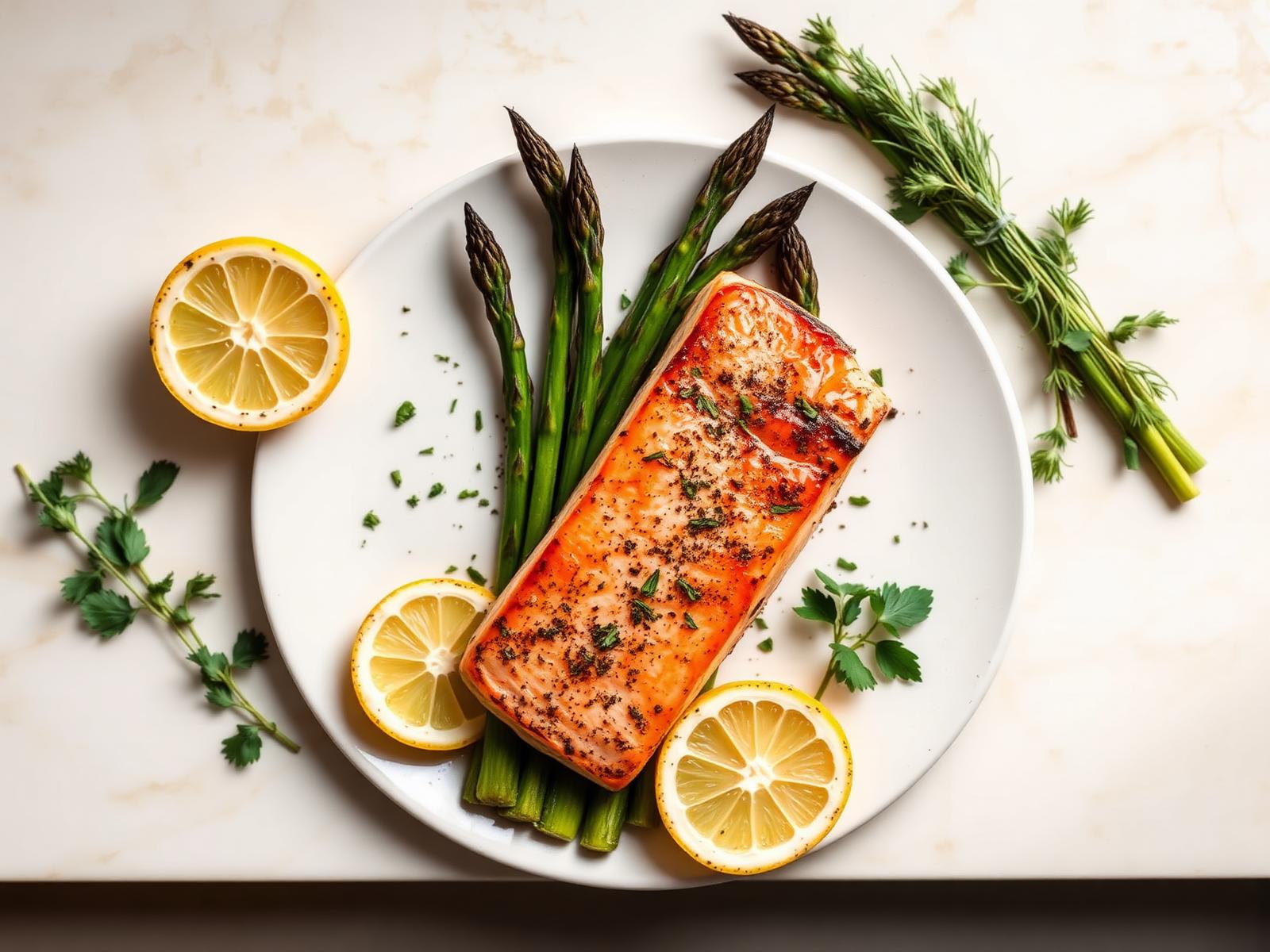
Pan-Seared Salmon with Lemon Asparagus
A restaurant-quality keto dinner that comes together in a single skillet in under 25 minutes. Crispy-skinned wild salmon, bright lemon, and tender roasted asparagus deliver a full plate of protein and heart-healthy fats with just 4 g net carbs.
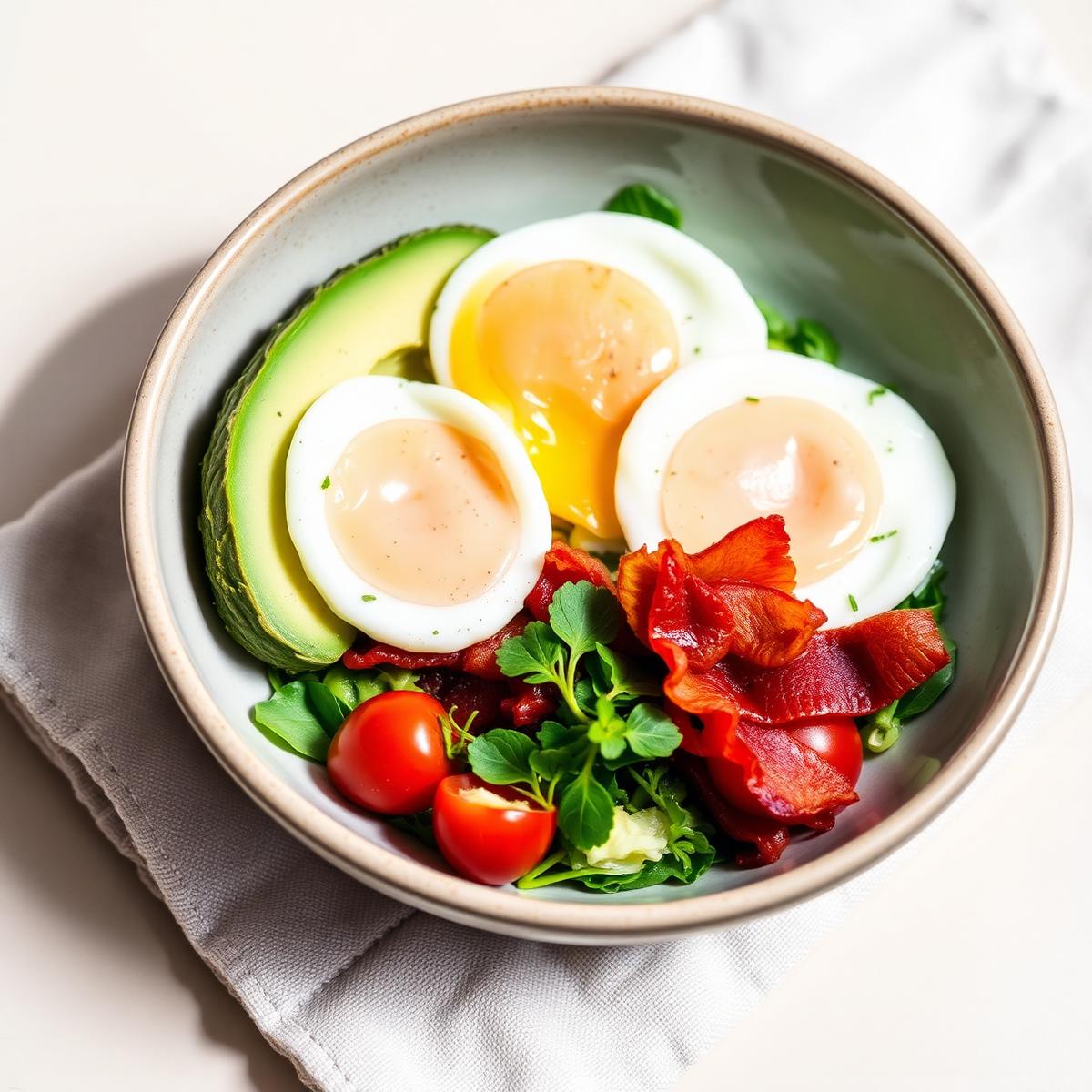
Avocado Breakfast Bowl with Soft-Boiled Eggs
A vibrant morning bowl that combines creamy avocado, jammy soft-boiled eggs, and crisp bacon for a keto breakfast that keeps you full for hours. Perfect for busy weekdays — most of it can be prepped ahead.
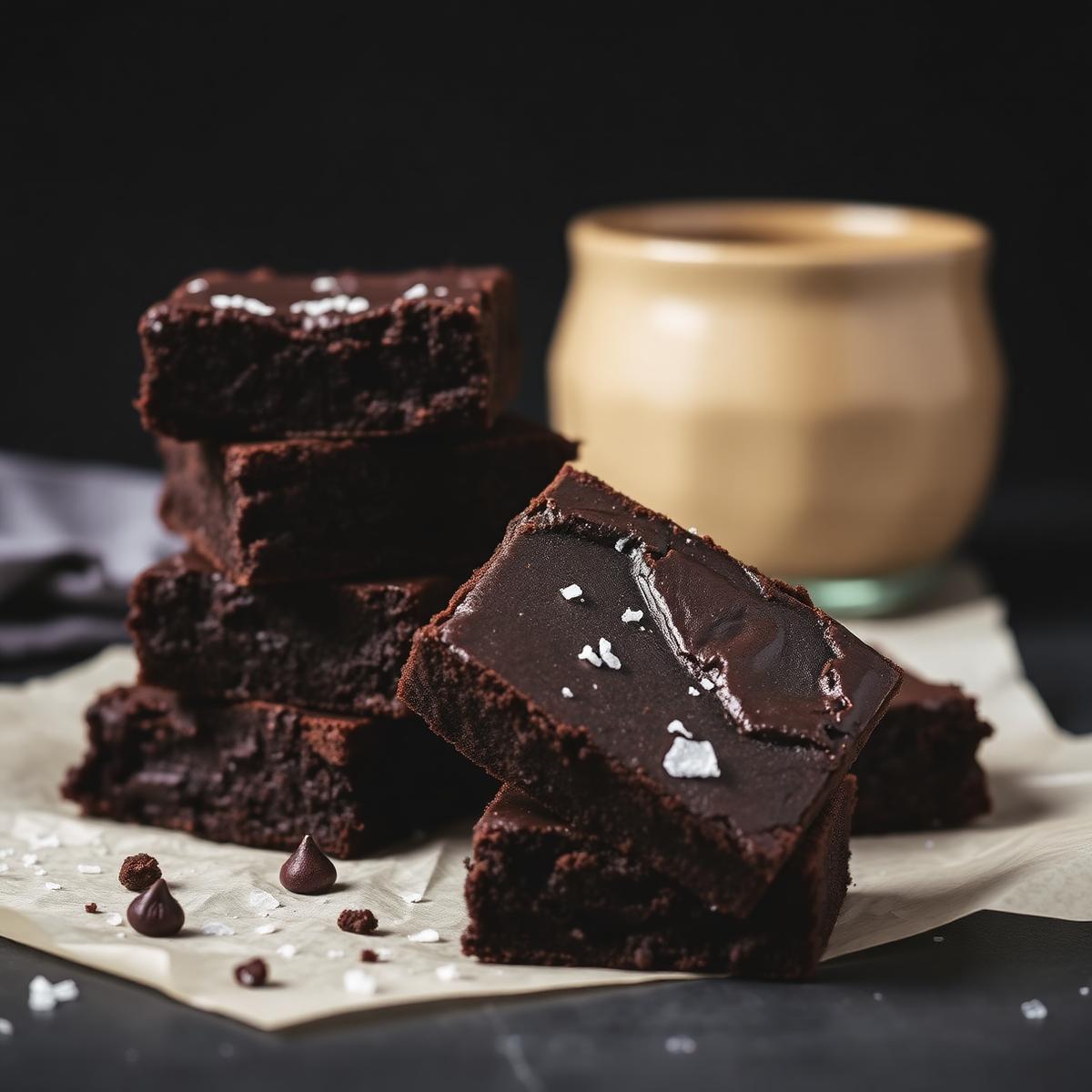
Fudgy Almond-Flour Chocolate Brownies
The keto brownie recipe our test kitchen makes on repeat. Rich, fudgy, and deeply chocolatey — with a shiny crackly top and only 2 g net carbs per square. No one will guess they're sugar-free and grain-free.