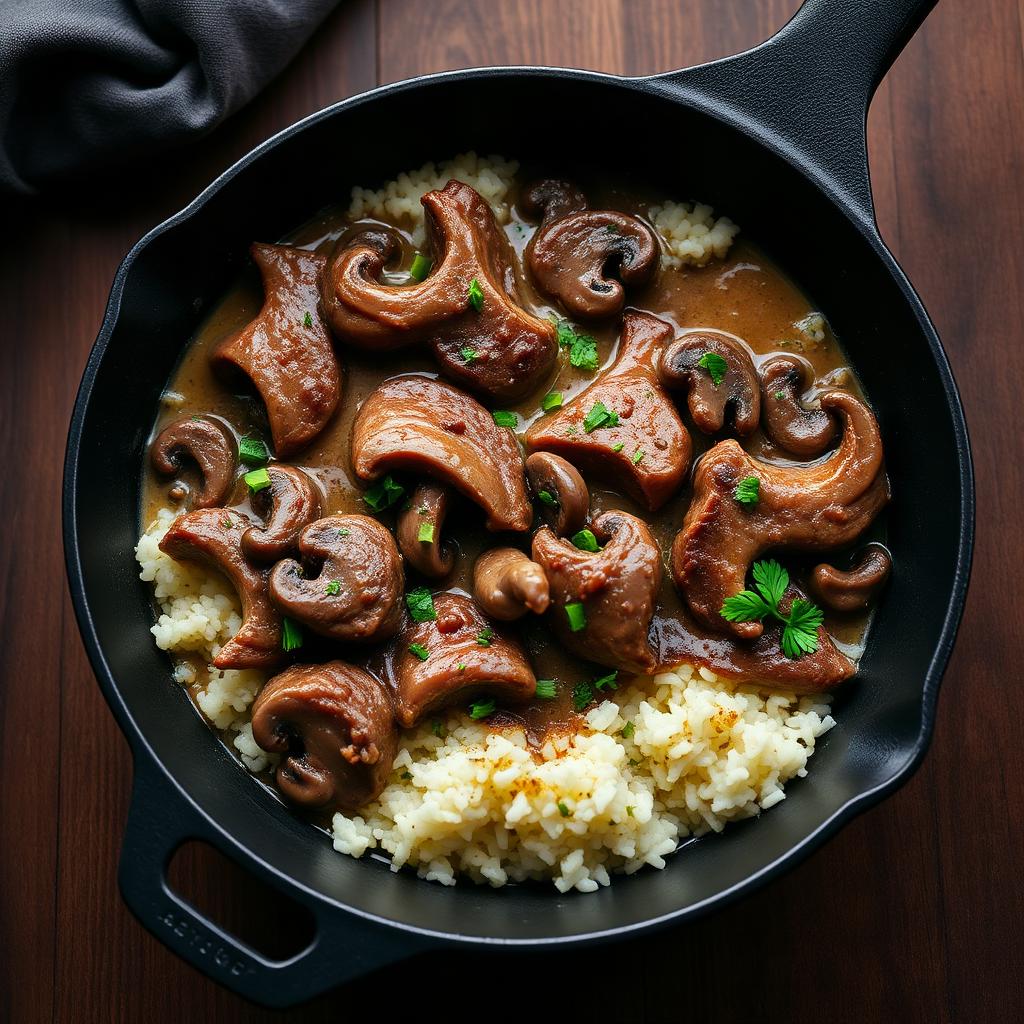
Keto Beef Stroganoff Over Buttery Cauliflower Rice
Tender strips of beef and cremini mushrooms in a savory sour-cream gravy, spooned over golden butter-toasted cauliflower rice. This one-pan comfort classic clocks in at 7 g net carbs and delivers the deep, umami warmth of Grandma's stroganoff without a single noodle.
By Keto Kitchen Hub Editorial · Published July 19, 2026
- Prep
- 15 min
- Cook
- 25 min
- Total
- 40 min
- Servings
- 4
- Net Carbs
- 7 g
Instructions
- 1
Pat beef completely dry, season aggressively with salt and pepper. Heat avocado oil in a large cast iron skillet over high heat. Sear the beef in a single layer for 60–90 seconds per side — just until browned but still pink inside. Do it in batches to avoid steaming. Transfer to a plate.
- 2
Reduce heat to medium-high. Add 1 tbsp butter and the mushrooms, spreading them in one layer. Do not stir for 3 minutes — you want a deep sear before releasing moisture. Then stir and cook 4 more minutes until browned.
- 3
Add onion and garlic; cook 3 minutes until softened. Pour in bone broth, scraping the fond from the bottom of the pan. Simmer 5 minutes to reduce by a third.
- 4
Whisk Dijon and Worcestershire into the pan. Remove from heat and stir in sour cream gradually — off-heat prevents curdling. Return beef and any juices to the pan; warm through gently for 2 minutes.
- 5
Meanwhile, melt 2 tbsp butter in a separate skillet over medium-high heat. Add cauliflower rice and a pinch of salt. Toast, undisturbed, for 3 minutes, then stir and cook 3 more minutes until golden and toasty.
- 6
Plate cauliflower rice, spoon stroganoff over the top, and finish with plenty of parsley and cracked pepper.
Nutrition (per serving)
- Calories
- 490
- Fat
- 32 g
- Protein
- 39 g
- Total Carbs
- 10 g
- Fiber
- 3 g
- Net Carbs
- 7 g
Values are estimates calculated from typical ingredient databases. See our disclaimer.
Storage
Refrigerate stroganoff and cauliflower rice separately in airtight containers for up to 4 days. Reheat the stroganoff gently over low heat, adding a splash of broth if thickened. Freeze the meat and mushroom base (without sour cream) up to 2 months; stir in fresh sour cream after thawing and reheating.
Expert tips
- Slice beef against the grain for the most tender bite — look for the muscle striations and cut perpendicular to them.
- Always temper sour cream by whisking a spoonful of hot broth into it before adding to the pan; this prevents a broken, grainy sauce.
- Cremini (baby bella) mushrooms have deeper flavor than white button. Splurge here.
Frequently asked questions
+Is Worcestershire sauce keto?
Most brands contain 1 g of sugar per teaspoon. Use sparingly, or choose a low-sugar or coconut-aminos-based version to stay strictly under 1 g of added sugar per serving.
+Can I use ground beef?
Yes — brown 1.5 lb ground beef in step 1 and skip the searing time. Use 85/15 for the best flavor.
+How do I keep cauliflower rice from getting mushy?
Use frozen (drier than fresh), spread in a single layer, and don't stir for the first 3 minutes. A hot pan and butter give it a nutty, toasted flavor.
+Can I make it dairy-free?
Replace sour cream with full-fat coconut cream plus 1 tsp lemon juice, and swap butter for ghee or more avocado oil.
Everything you need to know
In-depth guide · reviewed by our editorial team · approx. 15 min read
Reclaiming a Russian Classic for the Ketogenic Table
Beef stroganoff has traveled a long road since its debut in the kitchens of 19th-century Saint Petersburg. The original — attributed to a chef in the household of Count Pavel Stroganov — was tenderloin strips in a mustard-mushroom pan sauce finished with sour cream. There were no egg noodles. There was no rice. The noodles are an American mid-century addition, invented to stretch expensive beef across more plates during the post-war economic boom.
That historical detail matters, because the traditional Russian version is naturally keto-friendly. Strip away the noodles, keep the beef, mushrooms, and sour-cream sauce, and you have a meal that fits neatly into a ketogenic macro window. Add buttery cauliflower rice as a landing surface for the sauce and you preserve the mouthfeel of the noodle-based version without any of the carb load.
This recipe delivers a serious plate of comfort food — 490 calories, 32 g fat, 39 g protein, and just 7 g net carbs per serving — with the depth of flavor that separates real stroganoff from the beef-and-cream-of-mushroom-soup abomination that dominated 1970s American cookbooks.
Choosing the Right Cut of Beef
Sirloin is the sweet spot for a home-cook stroganoff. It's tender enough to cook in 60 to 90 seconds per side without turning into shoe leather, marbled enough to deliver real beef flavor, and priced somewhere between ribeye and stew meat. Look for top sirloin cut into 1-inch-thick steaks, then slice at home rather than buying pre-cut 'stir-fry' meat, which is usually a mix of tougher scraps.
Ribeye is a legitimate upgrade if the occasion calls for it — richer marbling means more flavor and more forgiveness on the sear. Tenderloin (filet mignon) is what Count Stroganov's chef used, but at modern prices it's a luxury choice for a Tuesday dinner. Skirt or flank steak both work if you slice very thinly against a clearly visible grain — otherwise they turn chewy.
Avoid pre-tenderized cube steak, chuck steak (unless you're braising for two hours), and any 'stew meat' package without a specific cut named. All of these require long, slow cooking to break down connective tissue; they will not become tender in the seven-minute cook time this recipe uses.
The single most important beef technique in this recipe is slicing against the grain. Every cut of muscle has visible fiber striations. Cutting perpendicular to those fibers shortens them, which is what makes each bite tender. Cut with the grain (parallel to the fibers) and you get long, stringy, chewy pieces even from the highest-quality cut.
The Mushroom Move: Sear, Don't Steam
Mushrooms are 90% water. Dropped into a hot pan, they release that water almost immediately. If your pan isn't hot enough, or if you crowd the mushrooms, or if you stir too soon, you'll boil them in their own moisture instead of searing them. The result is limp, gray, sulfur-tasting fungi instead of the deeply browned, meaty, umami-rich versions that make stroganoff worth eating.
The technique is simple but requires discipline. Heat the pan to medium-high before the butter goes in. Wait for the butter to stop foaming. Add mushrooms in a single, uncrowded layer — if your pan can't fit them all, work in two batches. Then, and this is the hard part, don't touch them for three full minutes. No stirring, no shaking, no peeking. After three minutes, they'll have released their water, evaporated it, and started to brown on the underside. Now you can stir.
The variety of mushroom matters too. Cremini (also sold as baby bella) has roughly three times the flavor compound content of white button mushrooms — 5-methylfurfural and lenthionine are the main aroma molecules, and they concentrate as the mushroom matures. Cremini is a young portobello; the same mushroom, three days younger. For weekend luxury, use shiitake or a wild-mushroom mix. Skip white button unless it's all your store carries.
The Sour Cream Question: Tempering, Not Cooking
Sour cream is where most stroganoff recipes go wrong. Full-fat sour cream is 20% milkfat and 4% protein — enough protein that it will curdle at temperatures above 175°F. Curdling is what causes the grainy, broken sauce that gives stroganoff a bad name.
The fix is to remove the pan from the heat before adding the sour cream. Not just turn the burner down — physically slide the pan off the heat source and let it rest for 30 seconds. Then whisk the sour cream in gradually. The residual heat from the pan and broth is enough to warm the cream through without breaking it.
If you want extra insurance, temper the sour cream: put it in a small bowl, whisk in two tablespoons of the hot broth from the pan, then whisk that warmed mixture back into the main pan. Tempering brings the sour cream up to sauce temperature slowly and prevents the shock that causes curdling. This is the same technique used for adding eggs to a custard or yogurt to a curry — small, patient additions to prevent structural failure.
Full-fat sour cream is not optional. Reduced-fat and non-fat versions contain added stabilizers and thickeners that behave unpredictably when heated. They also lack the fat that makes stroganoff feel like stroganoff. If you're worried about calories, eat a smaller portion of the real thing — never dilute the recipe with light dairy.
The Cauliflower Rice Base
Buttery cauliflower rice is the underrated hero of this dish. Made well, it's toasty, nutty, and provides the exact starchy-feeling surface stroganoff sauce craves. Made badly, it's watery, sulfurous, and reminiscent of overcooked vegetables in a school cafeteria.
The two variables that decide which version you end up with are moisture and heat. Frozen cauliflower rice actually works better than fresh here — freezing bursts the cell walls and lets water escape during cooking, resulting in a drier, toastier finished rice. Fresh cauliflower rice, straight from the food processor, needs to be spread on a clean kitchen towel and squeezed to remove excess moisture before it hits the pan.
Heat should be medium-high, and the butter should be foaming but not browning when the rice hits. Spread the rice in a single even layer. Don't stir for three minutes. That undisturbed contact with the hot pan is what develops the toasted, nutty flavor that separates good cauliflower rice from bad. After three minutes, stir once, spread again, and cook another three minutes. Salt only at the very end — salting early draws moisture out and steams the rice instead of toasting it.
The Macros: A Full-Meal Macro Breakdown
Per serving, this dish delivers 490 calories composed of 32 g fat, 39 g protein, and 7 g net carbs. That works out to 59% of calories from fat, 32% from protein, and 6% from net carbs — a slightly higher protein ratio than pure ketogenic macros, which makes it well-suited for people combining keto with strength training.
The 7 g net carbs break down as approximately 3 g from mushrooms, 2 g from onion and garlic, 1 g from cauliflower rice, and 1 g from the sour cream and mustard. For anyone on a strict 20 g net carb protocol, this dish uses about a third of your daily allowance and delivers nearly a quarter of your daily calories.
The protein number is worth calling out. At 39 g, this single meal exceeds the leucine threshold needed to fully stimulate muscle protein synthesis in adults over 40. For older keto athletes concerned about sarcopenia (age-related muscle loss), meals structured like this — 35 g+ protein, 25 g+ fat — are dramatically more effective at preserving lean mass than meals loaded with fat and light on protein.
If you want to lower the calorie load without sacrificing flavor, cut the butter in the cauliflower rice from two tablespoons to one and skip the second tablespoon of butter in the stroganoff sauce. That drops the total to about 420 calories per serving while preserving the sauce structure.
Ingredient Substitutions
For a dairy-free version, replace sour cream with a mixture of full-fat coconut cream and 1 teaspoon lemon juice (this recreates the tang). Replace butter with ghee (if you tolerate ghee — most dairy-sensitive people do because casein is largely removed) or avocado oil. The flavor shifts slightly toward coconut, but a heavier hand with Worcestershire and Dijon compensates.
For a lower-carb version (5 g net), skip the onion entirely and use extra garlic and a splash of onion powder for aromatic depth. Onion contributes roughly 2 g of the total 7 g net carbs.
For a slow-cooker version, sear the beef and mushrooms separately as directed, then combine everything except the sour cream in a slow cooker on low for 4 hours. Stir the sour cream in after cooking, off heat. The beef will be more tender but less textured.
For a Whole30-compliant version (no dairy, no legumes), swap sour cream for cashew cream (¾ cup soaked cashews blended with ½ cup broth and 1 tsp lemon juice) and skip Worcestershire in favor of coconut aminos.
For a poor-man's version, use ground beef instead of sirloin. Brown 1.5 lb of 85/15 ground beef, remove the excess fat, and proceed with the recipe as written. Cook time drops by about five minutes and cost by about 40%.
Troubleshooting Common Failures
Sauce broken and grainy: sour cream was added while the pan was too hot, or the sour cream itself was cold. Fix: pour the sauce into a blender with two tablespoons of cream cheese and blend on high for 30 seconds. Return to the pan on very low heat. It won't be perfect but it will be edible.
Beef tough and chewy: either overcooked or sliced with the grain instead of against it. Beef sirloin turns tough above 145°F internal temperature — always pull at 130°F for medium-rare and let carryover heat do the rest.
Mushrooms watery: pan wasn't hot enough, or you crowded them, or you stirred too soon. Discard the excess liquid (or reduce it separately to concentrate flavor) and continue. Next time, work in two batches.
Sauce too thin: you didn't reduce the broth enough after adding it to the pan. Fix: simmer on medium for three more minutes before adding sour cream. Never use xanthan gum or cornstarch — both change mouthfeel and cornstarch adds carbs.
Sauce too thick: add broth one tablespoon at a time until it loosens. Stroganoff should coat the back of a spoon but not sit like a pudding.
Wine and Beverage Pairing
Stroganoff traditionally pairs with a medium-bodied red wine — a Russian Kagor (fortified church wine) in its country of origin, but that's hard to find outside Eastern Europe. In the United States, a Pinot Noir from Oregon's Willamette Valley or a Barbera d'Asti from Piedmont both work beautifully. The acidity of these wines cuts through the sour cream sauce without overpowering the beef.
For a stronger pairing, a Rioja Reserva delivers the depth to stand up to the mushrooms and mustard. Avoid heavily oaked California Cabernets — they overwhelm the delicacy of the sauce.
For non-alcoholic pairings, a sparkling water with lemon and a small splash of bitters mimics the acid balance a wine provides. Kombucha with a mild fruit flavor also works, though check the sugar content — some brands run 8-12 g per bottle, which can undo the low carb count of the meal.
Meal Prep and Freezing
Stroganoff is excellent for meal prep in one specific way: prepare the beef and mushroom base without the sour cream, cool completely, and refrigerate up to four days or freeze up to two months in single-serving glass containers. Reheat gently in a saucepan, then stir in fresh sour cream just before serving.
The cauliflower rice can be prepared ahead as well and reheated in a hot skillet with a fresh knob of butter to re-crisp. If you microwave it, you'll lose the toasted texture entirely — always use a skillet for reheating.
For the freezer version, portion into single-serving containers, leaving a half-inch of headspace to allow for expansion. Thaw overnight in the refrigerator, then reheat gently. Add sour cream fresh — never freeze sauce with sour cream already in it, as freezing breaks the fat emulsion permanently.
Cultural Context and Why This Matters
Adapting classic dishes for keto is not about deprivation — it's about respecting the culinary tradition while honoring modern nutritional science. Beef stroganoff, in its Russian form, is a naturally keto-friendly dish. The mid-century American addition of noodles was a product of cheap wheat, expensive meat, and the need to stretch protein across more diners. Returning to the original, noodleless preparation is not a keto hack; it's a return to the recipe as its creator intended.
This pattern repeats across many world cuisines. Chinese hot pot without the rice noodles, French coq au vin without the potatoes, Mexican carne asada without the tortillas — these are all naturally low-carb dishes that got starchier as their cuisines industrialized. Keto cooking, at its best, is an opportunity to rediscover the pre-industrial versions of the dishes we love.
For readers building a keto recipe repertoire, the takeaway is to look backwards through cookbook history. The most elegant keto recipes are often 100+ years old, sitting in a paragraph of Escoffier or a family recipe passed down before white bread became the default landing surface for every sauce.
References
Historical background on beef stroganoff from William Pokhlebkin's A History of Vodka and Russian Cuisine. Mushroom flavor chemistry from a 2019 review in the Journal of Agricultural and Food Chemistry (vol. 67). Cauliflower nutrition from USDA FoodData Central entry #169986. Sour cream curdling threshold data from the Journal of Dairy Science.
This article is not medical advice. Consult a registered dietitian or physician before making major dietary changes, especially if you take medication for diabetes, blood pressure, or cardiovascular conditions.
Related recipes
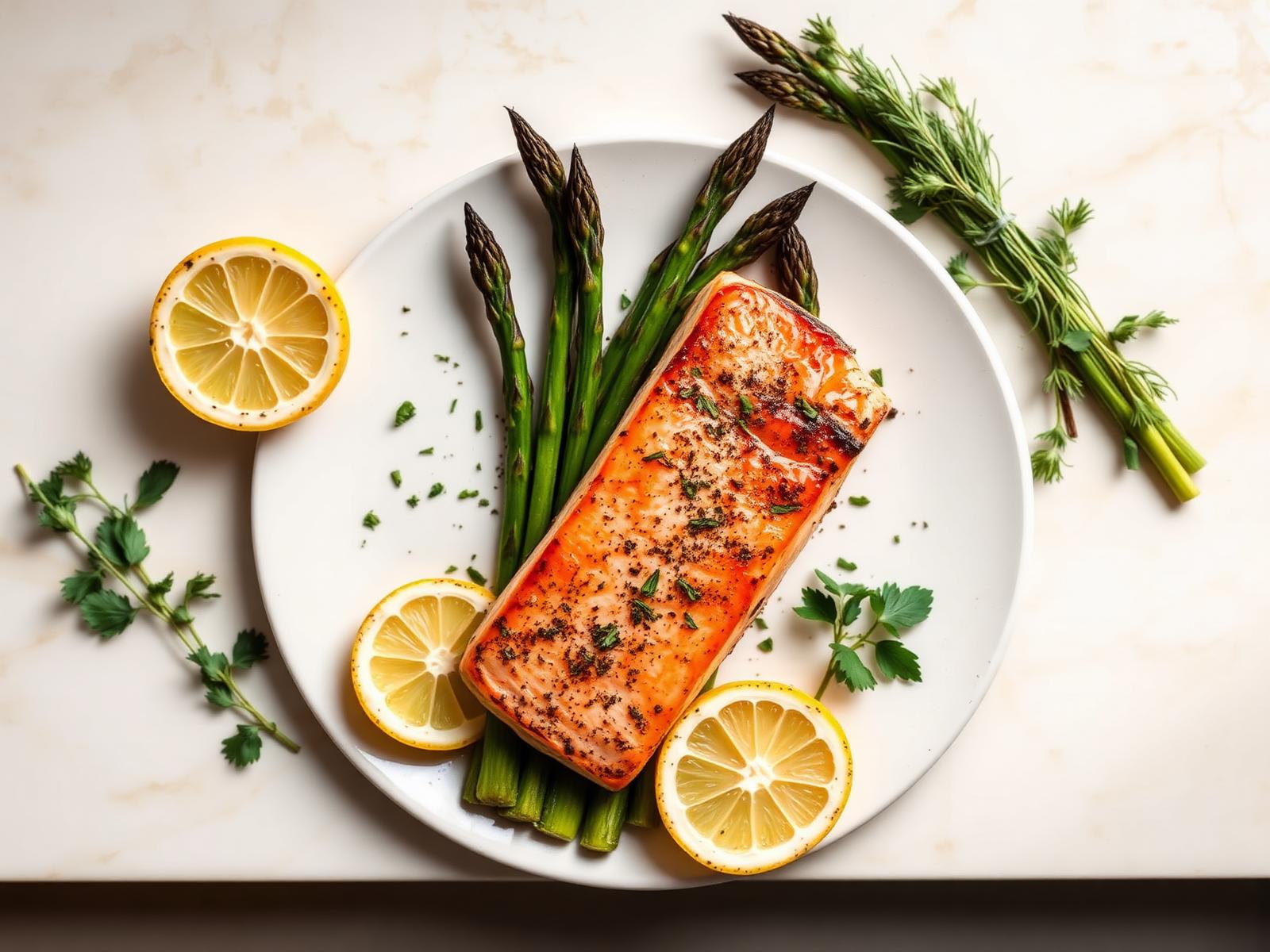
Pan-Seared Salmon with Lemon Asparagus
A restaurant-quality keto dinner that comes together in a single skillet in under 25 minutes. Crispy-skinned wild salmon, bright lemon, and tender roasted asparagus deliver a full plate of protein and heart-healthy fats with just 4 g net carbs.
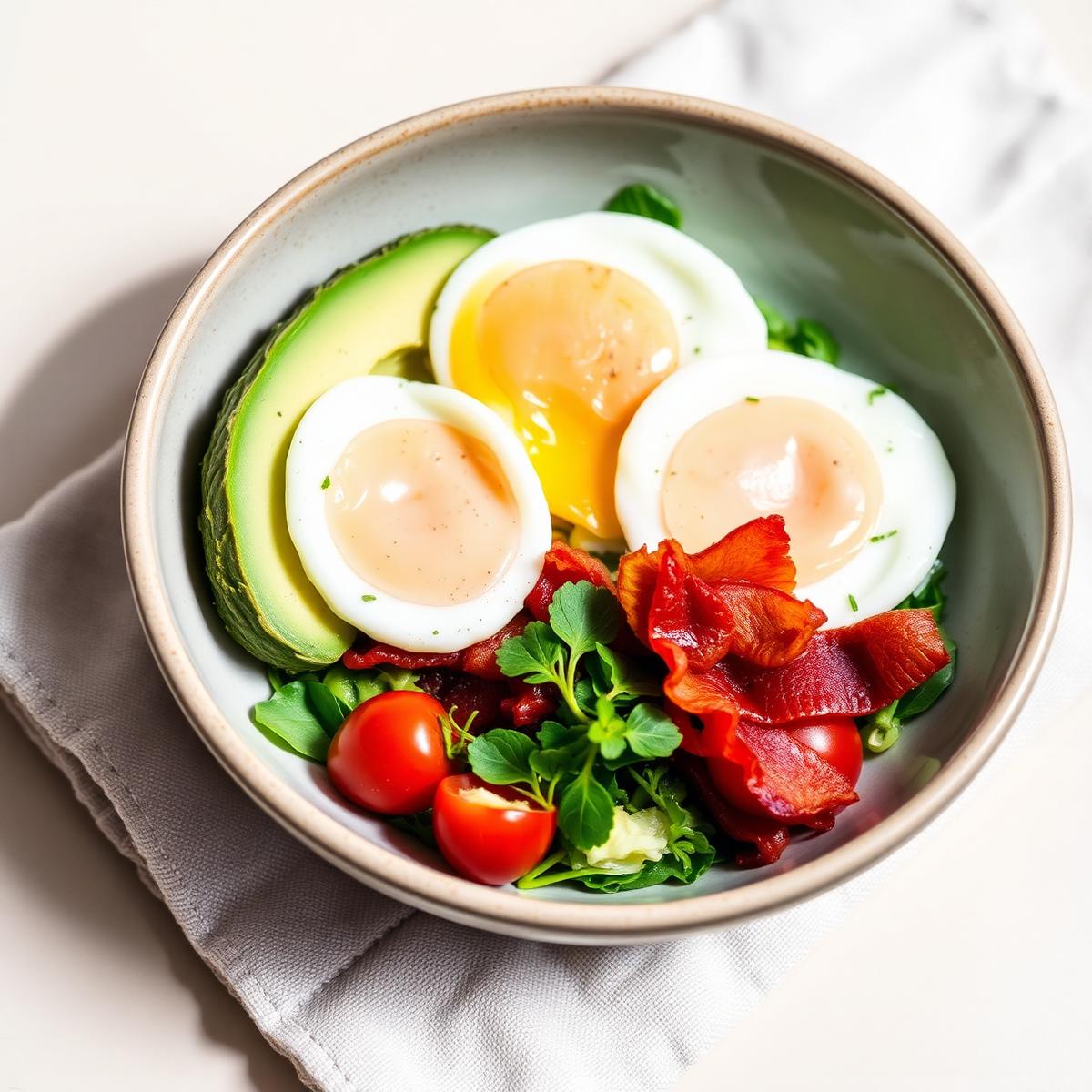
Avocado Breakfast Bowl with Soft-Boiled Eggs
A vibrant morning bowl that combines creamy avocado, jammy soft-boiled eggs, and crisp bacon for a keto breakfast that keeps you full for hours. Perfect for busy weekdays — most of it can be prepped ahead.
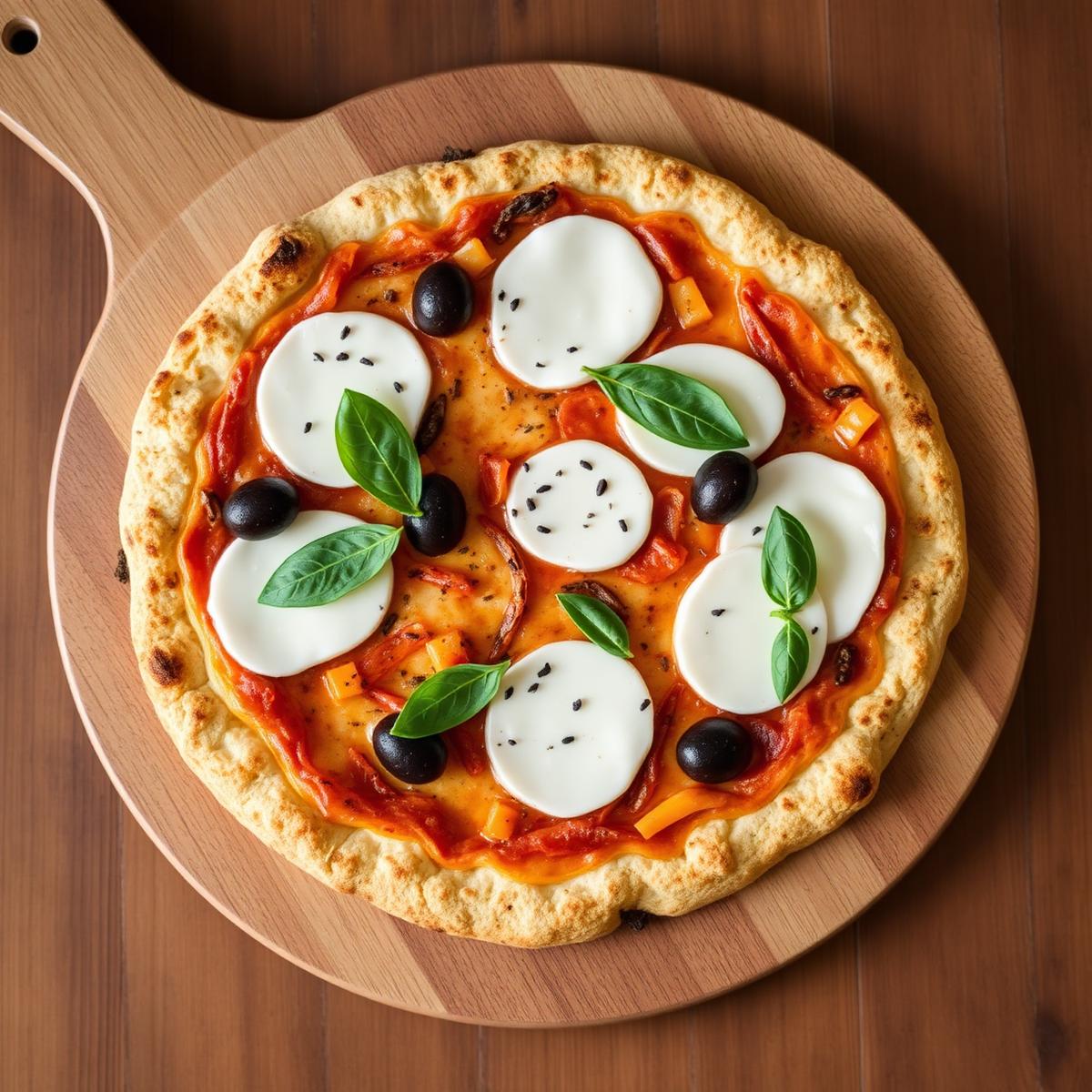
Cauliflower Crust Margherita Pizza
A genuinely crispy, foldable cauliflower crust topped with San Marzano tomato sauce, fresh mozzarella, and torn basil. This is our tested method for a pizza that holds its shape and doesn't turn to mush.