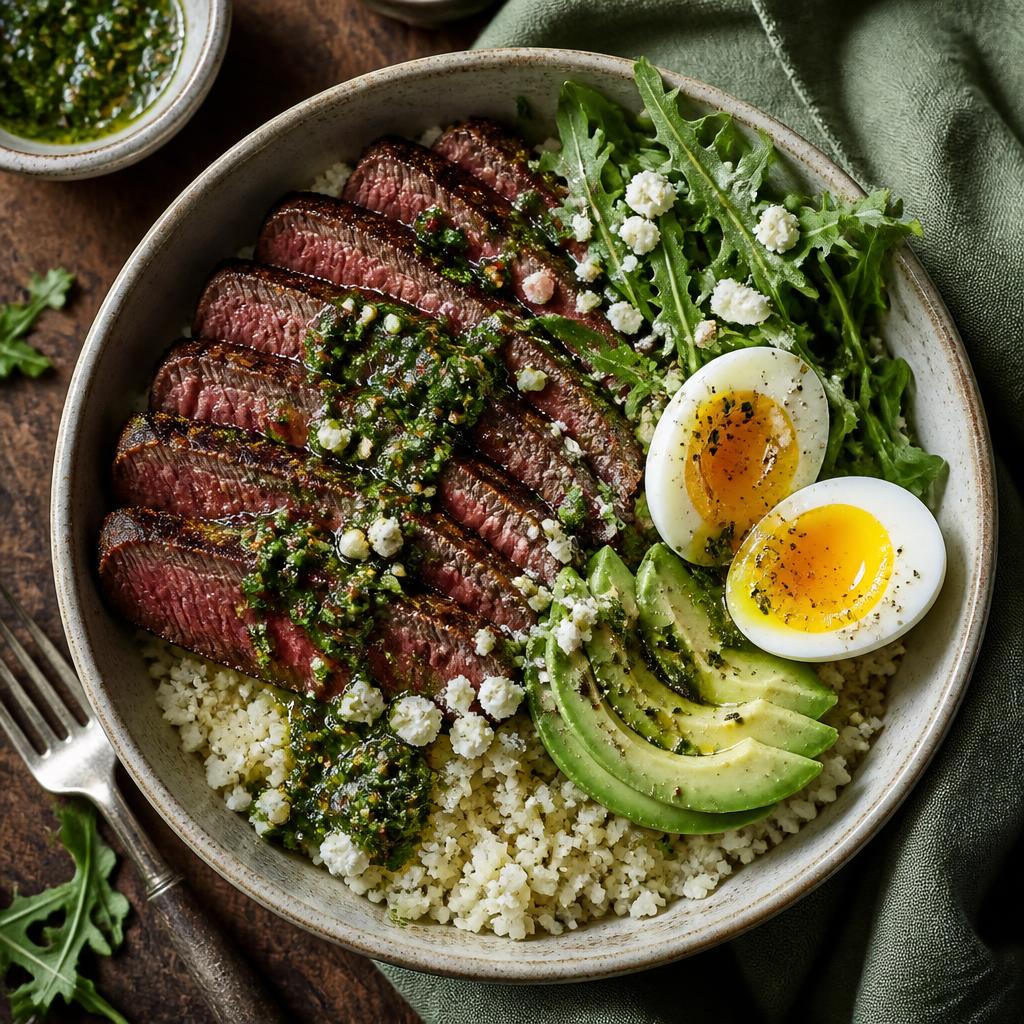
Grass-Fed Steak Power Bowl with Chimichurri
The single highest-protein bowl in our archive: 48 grams of complete protein per serving from a grass-fed sirloin, jammy soft-boiled egg, and crumbled feta stacked over lemon-buttered cauliflower rice with peppery arugula, avocado, and a bright herbaceous chimichurri. Built for anyone chasing body-composition goals without leaving ketosis — 620 calories, 42 g of fat, 48 g of protein, and just 6 g of net carbs per bowl.
By Keto Kitchen Hub Editorial · Published July 22, 2026
- Prep
- 15 min
- Cook
- 15 min
- Total
- 30 min
- Servings
- 2
- Net Carbs
- 6 g
Instructions
- 1
Pull the steak from the fridge and let it come to room temperature for 20 minutes while you prep everything else. Cold steak seared straight from the fridge cooks unevenly — the outside overcooks before the inside warms through.
- 2
Make the chimichurri: finely chop the parsley, oregano, and garlic (or pulse in a food processor 6–8 times — don't purée). Transfer to a bowl and stir in red pepper flakes, red wine vinegar, olive oil, and salt. Rest at room temperature at least 10 minutes so the flavors meld.
- 3
Bring a small saucepan of water to a rolling boil. Lower the eggs in gently with a spoon and set a timer for exactly 6:30 for jammy yolks. Transfer directly to an ice bath and let cool 3 minutes; peel and halve just before plating.
- 4
While eggs cook, pat the steak completely dry with paper towel and season generously on both sides with salt and pepper. Heat avocado oil in a cast iron or heavy stainless skillet over high heat until it shimmers and just starts to smoke.
- 5
Lay the steak in and press gently for 10 seconds. Sear undisturbed for 3 minutes, flip once, and cook another 2–3 minutes on the second side for medium-rare (internal 130°F / 54°C). Transfer to a cutting board and rest a full 5 minutes — this step is non-negotiable for juicy, tender slices.
- 6
While the steak rests, melt butter in the same skillet over medium-high. Add cauliflower rice in an even layer and don't stir for 3 minutes to develop a toasty crust. Stir once, spread again, cook another 2 minutes. Off heat, fold in lemon zest and half the lemon juice; season with salt.
- 7
Slice the rested steak against the grain into ¼-inch strips — cutting against the grain is what makes even a leaner grass-fed steak tender.
- 8
Assemble two wide bowls: divide the cauliflower rice on one side, arugula on the other. Fan the sliced steak over the rice, tuck in avocado slices and a halved soft-boiled egg, shower with feta, and spoon a generous 3 tbsp of chimichurri over the steak. Finish with flaky salt, cracked pepper, and lemon wedges on the side.
Nutrition (per serving)
- Calories
- 620
- Fat
- 42 g
- Protein
- 48 g
- Total Carbs
- 12 g
- Fiber
- 6 g
- Net Carbs
- 6 g
Values are estimates calculated from typical ingredient databases. See our disclaimer.
Storage
Best assembled fresh — arugula wilts and avocado browns in a stored bowl. Components store separately for up to 3 days: cooked sliced steak in an airtight container, cauliflower rice in a separate container, chimichurri in a jar under a thin layer of olive oil (which extends fridge life to 7 days). Assemble day-of with a fresh egg. Never microwave the steak — reheat slices in a hot dry skillet for 30 seconds per side, or serve cold over the rice.
Expert tips
- Grass-fed steak cooks about 30% faster than conventional grain-finished beef because it's leaner. Trust the internal thermometer, not the clock — 130°F for medium-rare, 135°F for medium.
- Cut against the grain. Look at the direction of the muscle fibers on top of the steak and slice perpendicular to them. This single technique difference is the reason restaurant steak feels more tender than home-cooked.
- Chimichurri is better the second day. Make a double batch and keep the extra in the fridge for eggs, roasted vegetables, or grilled chicken all week.
- Salt-drain the cauliflower rice only if using fresh, not frozen — frozen rice has already had its excess water removed during processing.
- For an even higher-protein version (55+ g), add a second egg per bowl or increase steak portions to 8 oz per serving. Total carbs stay identical.
Frequently asked questions
+Why grass-fed instead of grain-finished beef?
Grass-fed beef contains 2–5 times more omega-3 fatty acids, more conjugated linoleic acid (CLA), and higher vitamin E and beta-carotene than conventionally raised beef, per data from the USDA and multiple peer-reviewed comparisons. For a ketogenic diet — where fat quality matters more than average — the swap is worth the modest price premium.
+How is this only 6 g net carbs with all these ingredients?
The cauliflower rice contributes about 3 g, the avocado about 1.5 g, arugula less than 1 g, and the feta and chimichurri together roughly 0.5 g. The steak, eggs, and olive oil contribute zero. Even with generous portions of every component, the whole bowl lands well under a strict 20 g daily ketogenic budget.
+Is 48 g of protein in one meal too much?
No — recent leucine-threshold research (International Society of Sports Nutrition, 2018) suggests adults benefit from 30+ g of high-quality protein per meal to fully activate muscle protein synthesis, and adults over 40 or those doing resistance training benefit from higher amounts. This bowl hits that target from three complementary complete-protein sources.
+Can I use a different cut of steak?
Yes — flat iron, ribeye, strip, or flank all work. Flank and skirt need extra-strict against-the-grain slicing to stay tender. Ribeye pushes fat higher and calories to about 720 per bowl; strip lands nearly identical to sirloin.
+Is this dairy-free adaptable?
Swap butter for ghee (well-tolerated by most dairy-sensitive people) or extra avocado oil, and omit the feta or replace with a dairy-free feta alternative. You lose about 6 g of protein and 4 g of fat per bowl — add a second egg to compensate.
+Can I meal-prep this for the whole week?
Component-prep, yes; fully assembled bowls, no. Cook steak, cauliflower rice, and chimichurri on Sunday and store separately (see storage notes above). Assemble each morning in 4 minutes — the fresh arugula, avocado, and soft-boiled egg make the difference between a great bowl and a sad one.
Everything you need to know
In-depth guide · reviewed by our editorial team · approx. 15 min read
Why This Bowl Is the Gold Standard for High-Protein Keto
There is a persistent myth in ketogenic circles that a low-carb diet has to be low in protein. It doesn't — and for most people, it shouldn't. The original clinical ketogenic protocols developed in the 1920s for pediatric epilepsy were deliberately protein-restricted because excess amino acids can, in vulnerable metabolic states, be converted to glucose through gluconeogenesis. But for the vast majority of modern keto adopters — people using low-carb eating for weight loss, metabolic health, athletic performance, or simple appetite control — protein is the single most protective macronutrient in the diet. It preserves lean muscle mass during fat loss, dominates satiety hormones, and supports the metabolic rate that keeps a diet sustainable past the first month.
This grass-fed steak power bowl is our test-kitchen answer to the 'high-protein keto' problem. At 48 grams of complete protein per serving, sourced from three complementary animal proteins — beef, egg, and cheese — it lands in the sweet spot that leucine-threshold research has identified as fully activating muscle protein synthesis. It does so in a single bowl that takes 30 minutes from cold fridge to plated dinner, uses ingredients any grocery store carries, and tastes better than the grain bowls that dominate every fast-casual chain from Sweetgreen to Chipotle.
The chimichurri is what turns a great macro profile into a great meal. Argentine chimichurri is the original steak sauce — a bright, herbaceous, garlic-forward emulsion of parsley, oregano, vinegar, and olive oil that cuts through the richness of fatty beef the way squeeze bottles of ranch dressing never could. Every element of this bowl is engineered around it: the peppery arugula echoes the bite of the raw garlic; the jammy soft-boiled egg carries the sauce into every corner of the bowl; the lemon-buttered cauliflower rice tempers the vinegar's acidity. This is not seven ingredients thrown into a bowl — it is a composed dish.
The Macros: How This Fits a High-Protein Keto Day
Per plated bowl, this recipe delivers approximately 620 calories, 42 grams of fat, 48 grams of protein, 12 grams of total carbohydrate, 6 grams of fiber, and 6 grams of net carbohydrate. Broken down by calorie ratio, that's 61% of calories from fat, 31% from protein, and just under 4% from net carbs — the exact profile most functional-medicine practitioners recommend for a 'high-protein ketogenic' approach.
The 48 grams of protein per bowl deserves specific attention. Adults over 40, women on GLP-1 agonists, anyone doing progressive resistance training, and anyone in a caloric deficit for fat loss should be targeting at least 30 grams of high-quality protein per meal, and ideally 35–45 grams for maximum muscle protein synthesis. This single bowl exceeds all of those targets from bioavailable animal sources — grass-fed beef delivers roughly 32 g, one large egg contributes 6 g, and two tablespoons of feta add 4 g. The remaining amino acid density comes from small contributions in the cauliflower, arugula, and cheese fats.
The 6 grams of net carbs are distributed almost entirely across nutrient-dense vegetables: about 3 g from the cauliflower rice, 1.5 g from the avocado, less than 1 g from the arugula, and trace amounts from the aromatics in the chimichurri. Even with generous portions, the bowl fits inside a strict 20 g daily net-carb ceiling with 14 g still available for a second meal, coffee cream, or a small square of high-cacao chocolate.
For anyone tracking fiber — and fiber intake is chronically low on ketogenic diets, contributing to the digestive complaints that push many people off the diet in month two or three — this bowl delivers 6 grams from the cauliflower, avocado, arugula, and herbs alone. That single bowl covers roughly 20% of the daily fiber target most nutrition authorities recommend, all while remaining strictly ketogenic.
Ingredient Deep-Dive: Why Grass-Fed Matters Here
Grass-fed sirloin is the anchor, and the 'grass-fed' descriptor is not marketing fluff. Cattle raised on pasture their entire lives produce beef with meaningfully different nutritional characteristics from grain-finished cattle. Multiple peer-reviewed comparisons, including data from the USDA Agricultural Research Service, show grass-fed beef contains 2–5 times more long-chain omega-3 fatty acids, 2–3 times more conjugated linoleic acid (CLA), higher levels of vitamin E and beta-carotene, and a fat profile more skewed toward monounsaturated and polyunsaturated fats. For a ketogenic diet — where 60–70% of your calories are coming from fat — the quality of that fat is not a marginal detail.
Sirloin is our default cut because it hits the intersection of price, flavor, and macros. A grass-fed sirloin from a US grocery store runs $12–18 per pound and delivers about 26 g of protein per 4 oz cooked. Flat iron steak is our second choice — slightly richer flavor, similar macros, often cheaper. Ribeye pushes fat higher and calories to around 720 per bowl; strip steak lands nearly identical to sirloin. Skirt and flank work but require strict against-the-grain slicing to stay tender.
The soft-boiled egg is not garnish — it's a structural element. At 6.5 minutes of boiling followed by an ice bath, the yolk sets to a jammy, almost custardy consistency that breaks over the steak and cauliflower rice, adding another 6 g of protein, 5 g of fat, and a rich mouthfeel that binds the whole bowl together. Pastured eggs (labeled 'pasture-raised,' not just 'cage-free' or 'free-range') carry meaningfully more omega-3s and vitamin D than conventional eggs, following the same pattern as grass-fed beef.
Cauliflower rice — frozen or fresh — is our default keto starch replacement, and there are two reasons frozen is our first choice for this recipe. First, it has already been washed, riced, and had excess moisture removed during processing, which means it toasts in a hot skillet without the salt-draw step fresh cauliflower requires. Second, it costs about half as much and stores for months. Fresh cauliflower riced in a food processor works identically, but plan an extra 10 minutes to salt-drain the ricing before it hits the pan.
Chimichurri ingredients earn every gram of their space. Flat-leaf (Italian) parsley — not curly parsley, which is bitter — carries the bulk of the flavor. Fresh oregano is dramatically better than dried but dried works in a pinch at one-third the volume. Red wine vinegar is the traditional acid; sherry vinegar or Champagne vinegar also work. The olive oil quality matters more than most cooks realize — a peppery, grassy extra virgin from California, Spain, or Sicily makes the sauce sing; a supermarket-blend olive oil makes it taste flat.
Feta or goat cheese is the salty-tangy finish. A traditional Greek feta made from sheep's milk (or a sheep-goat blend) is our first choice — creamier, funkier, and lower in lactose than cow-milk feta. Bulgarian or French feta work equally well. Two tablespoons per bowl is deliberate: enough to punctuate the flavor, not enough to bury the chimichurri.
Avocado is the last piece and provides the fiber-plus-fat combination that makes this bowl feel like a complete meal instead of a protein shake in bowl form. Half a medium Hass avocado adds 4.5 g of fiber, 8 g of monounsaturated fat, and only 1.5 g of net carbs — a nutritional bargain by any measure.
The Technique: Getting Steak Right at Home
The single biggest reason home-cooked steak disappoints is temperature — three temperatures, actually: the temperature of the steak going into the pan, the temperature of the pan, and the temperature of the steak coming out. Miss any one of them and even the best cut becomes tough, gray, and joyless.
Room-temperature start. A steak pulled straight from a 38°F fridge and dropped into a hot pan cooks unevenly — the outside gray-and-overcooks trying to bring the interior up to temperature. Twenty minutes on the counter, uncovered, brings the steak up to about 55°F and lets it cook evenly from edge to edge. Food-safety-wise, twenty minutes on a clean counter is well inside the two-hour USDA safe-handling window; this is not an operational risk for a healthy person.
Hot pan, dry surface. The Maillard reaction — the non-enzymatic browning that creates the caramelized crust every good steak needs — happens between 300°F and 500°F. A properly preheated cast iron or heavy stainless skillet with a smoking-hot film of avocado oil (smoke point ~500°F, dramatically higher than olive oil or butter) sits right in that window. If your pan isn't smoking when the steak lands, it's not hot enough — pull the steak back off, wait 60 seconds, and try again. A steak in an underheated pan steams instead of sears.
Rest. Non-negotiable. When steak cooks, the muscle fibers contract and force juice toward the center of the cut. Sliced immediately, that juice pours out onto the cutting board and the steak eats dry. Resting for a full 5 minutes lets the fibers relax and reabsorb their internal moisture, so the juice stays where it belongs — inside the meat, on your plate, in your bowl. Five minutes for a 1-inch steak; 8–10 minutes for a thicker ribeye or flat iron.
Slice against the grain. Look at the top of the rested steak and identify the direction of the muscle fibers — they run in visible parallel lines. Slice perpendicular to those lines, at a slight bias, in ¼-inch strips. This shortens the fiber length in every bite and is the single technique difference that makes even lean grass-fed steak eat as tender as a marbled ribeye.
The soft-boiled egg technique is worth memorizing. Water at a rolling boil, eggs lowered gently with a slotted spoon, timer for exactly 6:30 (not a minute more), and directly into an ice bath. Six and a half minutes produces a yolk that is just set at the edges and molten in the center — the exact texture that breaks over the steak like a warm sauce. Peel under running water for cleaner peels. If your eggs are extra-large, bump to 7:00; if they are farm-fresh (very fresh), add 30 seconds to the timer because fresh eggs cook slightly slower than older eggs.
Common Mistakes and How to Fix Them
The tough-steak problem. Your steak is gray, chewy, and joyless despite following the recipe. This is almost always temperature. Either the pan was not hot enough (underdeveloped crust, gray band under the surface), the steak went in cold from the fridge (uneven cook), or you skipped the rest (juice pooled on the board instead of staying in the meat). Fix: infrared thermometer or a drop of water test — a properly preheated cast iron sizzles a drop of water into vapor in under a second. If the water skitters and lingers, the pan is not hot enough yet.
The overcooked steak problem. You aimed for medium-rare and got medium-well. Grass-fed beef cooks 25–35% faster than grain-finished beef because it's leaner and denser. Recipe times calibrated for supermarket steak overcook grass-fed cuts. Fix: buy a $15 instant-read thermometer and pull the steak at 128°F for medium-rare (it will carry over to 132–134°F during rest). Trusting your eyes or the clock is a losing strategy.
The soggy cauliflower rice problem. Your rice ended up wet and mushy instead of toasted and separate. Two causes: fresh cauliflower that wasn't salt-drained, or stirring the frozen rice too soon after it hit the pan. Fix: do not touch the rice for the first 3 minutes in the pan — that undisturbed contact is what develops the toasty, nutty flavor and allows any residual moisture to steam off. If using fresh cauliflower, salt-drain in a colander for 10 minutes and squeeze in a clean towel before cooking.
The chimichurri that tastes like grass clippings. Almost always parsley problem. Curly parsley is bitter and grassy; flat-leaf (Italian) parsley is bright and clean. If you can only find curly parsley, use 25% less than the recipe calls for and increase the fresh oregano to compensate. The other culprit is old olive oil — rancid oil is bitter and no herb can save it.
The rock-hard yolk problem. You aimed for jammy and got fully hard-boiled. Two possibilities: timer started too early (water wasn't at a full rolling boil when the eggs went in), or you skipped the ice bath (carry-over heat continued cooking the yolks). Fix: don't start the timer until the water is at a violent boil, and transfer eggs directly to ice water for at least 3 minutes before peeling.
Variations to Rotate Through the Week
The Mediterranean version. Swap the chimichurri for a lemon-tahini drizzle (¼ cup tahini + juice of 1 lemon + 2 tbsp water + salt), keep the feta, and add 6 kalamata olives per bowl. Pushes the flavor toward Greek gyro without changing macros meaningfully — still 6 g net carbs, still 45+ g of protein.
The Tex-Mex version. Season the steak with a dry rub of cumin, smoked paprika, garlic powder, and chipotle powder before searing. Swap chimichurri for a quick avocado crema (½ avocado + 2 tbsp sour cream + juice of ½ lime + salt, mashed with a fork). Skip the feta or replace with cotija. Adds about 1 g net carbs from the crema; protein and total calories stay nearly identical.
The steak-and-egg breakfast bowl. Reduce the steak portion to 4 oz per serving, keep everything else, and add a second egg. Delivers 42 g of protein and 5 g of net carbs — a ketogenic breakfast that will hold you until 2 p.m. without a snack. Especially useful for anyone doing intermittent fasting who breaks fast around noon.
The batch-cook variation. Sear a full 2-lb sirloin roast instead of individual steaks (12 minutes at 400°F after a hard sear on both sides for a rare-to-medium-rare center). Slice as needed throughout the week for 4–5 bowls' worth of steak. Cauliflower rice, chimichurri, and feta hold in the fridge for 5–7 days; assemble each bowl with fresh arugula, avocado, and egg in 5 minutes.
The pescatarian version. Swap the steak for 6 oz of pan-seared salmon per serving. Delivers 40 g of protein per bowl, higher omega-3 content, and slightly lower calories (about 560 per bowl instead of 620). Everything else in the bowl stays identical; the chimichurri pairs beautifully with salmon.
Meal Planning: Using This Bowl in a High-Protein Keto Week
This bowl sits at the top of our recommended keto-plus-strength-training meal plan. For anyone lifting weights three or more times per week, protein intake in the 1.6–2.2 grams per kilogram of body weight range is the evidence-based sweet spot for muscle preservation during a caloric deficit and muscle gain during a caloric surplus (International Society of Sports Nutrition position stand, 2018). For a 170-lb (77 kg) adult, that translates to 123–170 g of protein per day — a target that requires deliberate meal construction, not accidental accumulation.
A ketogenic day built around this bowl at dinner might look like: breakfast of a three-egg omelet with 2 oz cheddar and half an avocado (30 g protein, 5 g net carbs); lunch of a chicken Caesar salad with 6 oz grilled chicken and 2 tbsp Parmesan (48 g protein, 4 g net carbs); dinner of this steak power bowl (48 g protein, 6 g net carbs). Daily totals: 126 g protein, 15 g net carbs — perfect for a lifting adult in a slight caloric deficit and comfortably inside strict ketosis.
For competitive physique athletes preparing for a photo shoot or bodybuilding stage, the dinner slot can be repeated for two meals per day: this bowl at lunch and again at dinner delivers 96 g of protein and 12 g of net carbs from two meals alone, leaving enormous flexibility for breakfast and any pre- or post-workout meals. Anecdotally, several of our recipe testers who compete in physique divisions have run this bowl twice daily for peak week prep with excellent results.
For families or couples, this recipe doubles cleanly to serve 4. A 12-inch cast iron holds 24 oz of steak comfortably; double the chimichurri; cook the cauliflower rice in two batches or one very large skillet. Assembly takes the same 5 minutes per bowl regardless of how many you're making. Total end-to-end for a family of four: still under 45 minutes.
Frequently Asked Questions
Is 48 grams of protein too much for one meal? No. The 'excess protein turns into sugar' concern is significantly overstated in most keto circles. Gluconeogenesis is a demand-driven process, not a supply-driven one — the liver produces glucose based on physiological need, not on the amount of dietary protein you eat. Multiple studies, including work by Kevin Hall at the NIH and Jeff Volek at Ohio State, have shown that high-protein ketogenic diets do not interfere with ketosis in metabolically healthy adults.
Will this kick me out of ketosis? Almost certainly not for the vast majority of people. Six grams of net carbs is a fraction of the 20–50 g daily threshold that defines nutritional ketosis for most adults. The protein load will not meaningfully alter ketone levels for anyone not on a strict therapeutic ketogenic protocol for epilepsy or specific medical conditions.
Can I use conventional (grain-finished) beef instead of grass-fed? Yes, and it will still be delicious. The macros are nearly identical — the differences are in the fatty acid profile and micronutrient content, not the protein or carb count. Grass-fed is a quality-of-fat upgrade, not a macros requirement. If cost is a barrier, buy grass-fed less often but choose it when you do.
How does this compare to a Chipotle steak bowl? A Chipotle steak bowl with brown rice, black beans, salsa, and cheese runs approximately 705 calories and 65 g of carbs (roughly 55 g of net carbs). This bowl delivers similar calories, dramatically higher protein (48 g vs. 32 g), and 90% fewer net carbs. A fast-casual steak bowl is not a keto-compatible meal without significant substitution; this one is by design.
Can I skip the chimichurri to save time? You can, but you'll lose the element that ties the bowl together. A shortcut: bottled Argentine chimichurri from Trader Joe's or Whole Foods is a decent stand-in (about 60 seconds of prep time saved), or a simple lemon-garlic olive oil drizzle (3 tbsp olive oil + 1 clove pressed garlic + juice of ½ lemon + salt) covers 80% of the job in 30 seconds.
Is grass-fed beef worth the price premium? For most home cooks eating beef 2–4 times per week, yes. The nutritional differences are meaningful for a ketogenic diet where fat quality drives long-term outcomes, and the flavor is noticeably richer. If your grocery budget is tight, grass-fed ground beef (usually only $1–2 more per pound than conventional) delivers most of the benefit at a fraction of the price premium of grass-fed steaks.
References
Grass-fed vs. grain-finished beef nutrient comparisons from USDA Agricultural Research Service and Daley et al., 'A review of fatty acid profiles and antioxidant content in grass-fed and grain-fed beef' (Nutrition Journal, 2010). Muscle protein synthesis and per-meal protein threshold research from the International Society of Sports Nutrition position stand on protein intake (Journal of the International Society of Sports Nutrition, 2018). Gluconeogenesis and dietary protein research from Veldhorst et al. (British Journal of Nutrition, 2009) and reviews by Kevin Hall (NIH). Maillard reaction temperature ranges from Harold McGee, On Food and Cooking (2nd ed, 2004).
This is general nutrition information, not medical advice. Consult your healthcare provider before starting a ketogenic diet or dramatically increasing protein intake, especially if you are pregnant, breastfeeding, taking medication for diabetes or blood pressure, or managing kidney disease.
Related recipes
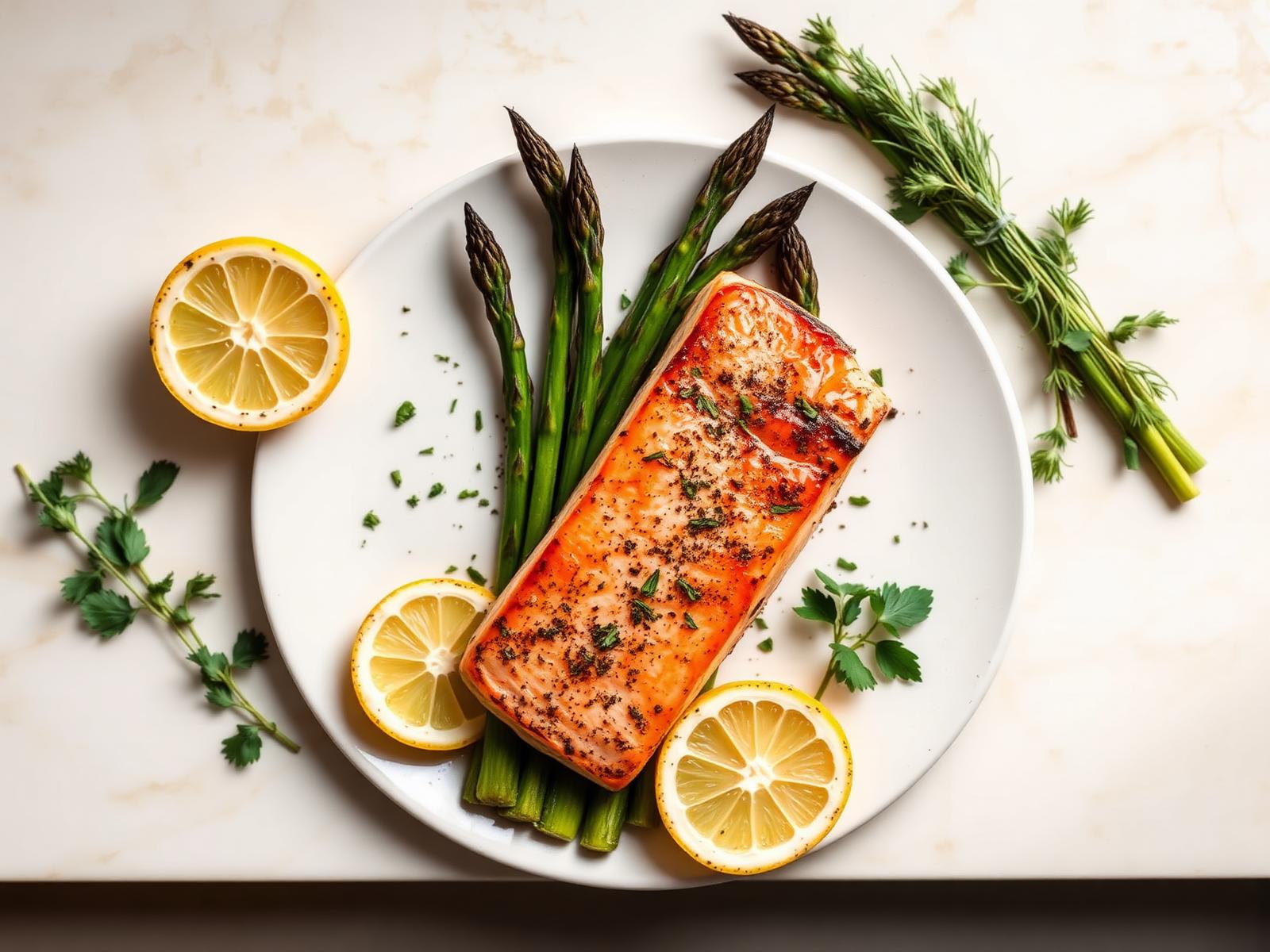
Pan-Seared Salmon with Lemon Asparagus
A restaurant-quality keto dinner that comes together in a single skillet in under 25 minutes. Crispy-skinned wild salmon, bright lemon, and tender roasted asparagus deliver a full plate of protein and heart-healthy fats with just 4 g net carbs.
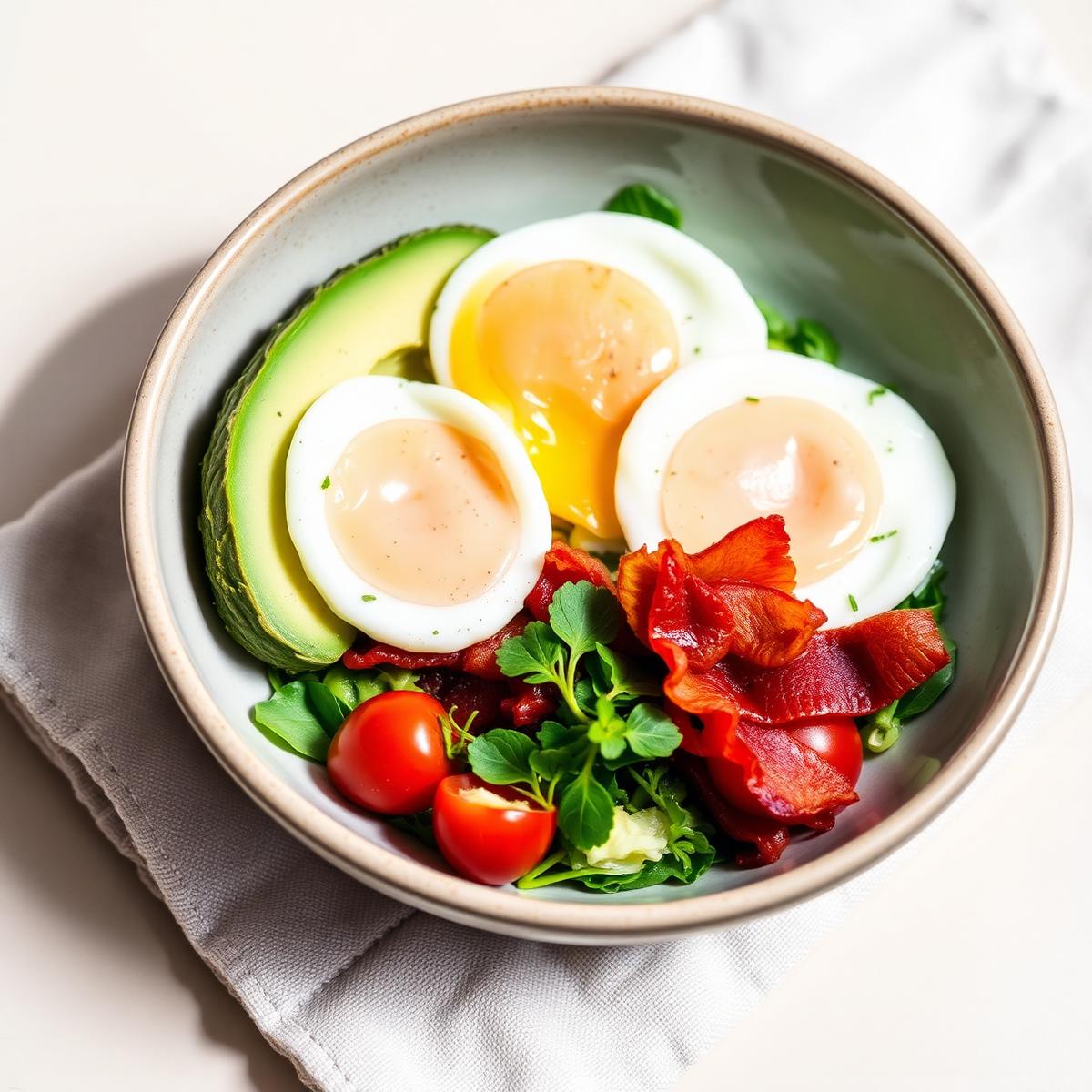
Avocado Breakfast Bowl with Soft-Boiled Eggs
A vibrant morning bowl that combines creamy avocado, jammy soft-boiled eggs, and crisp bacon for a keto breakfast that keeps you full for hours. Perfect for busy weekdays — most of it can be prepped ahead.
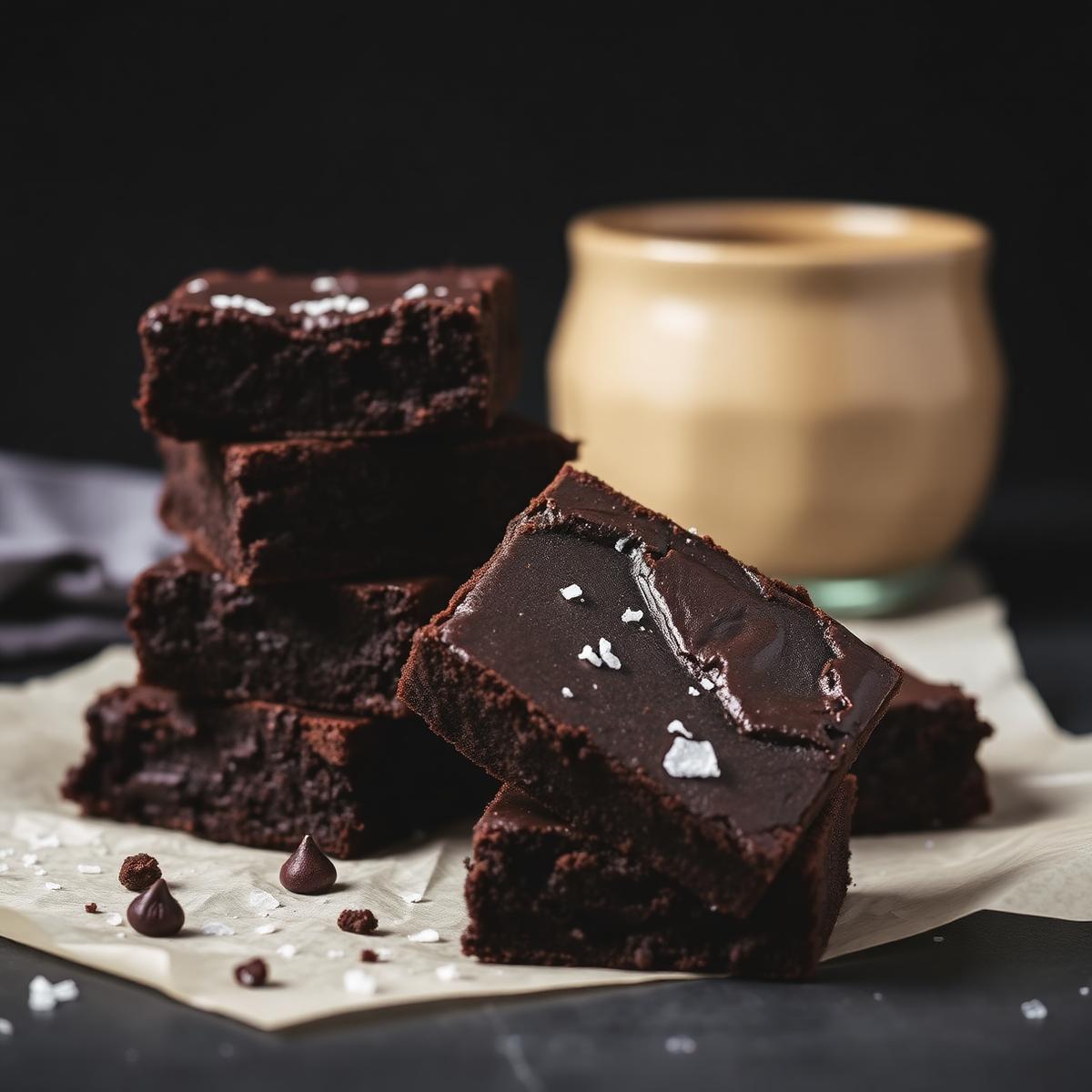
Fudgy Almond-Flour Chocolate Brownies
The keto brownie recipe our test kitchen makes on repeat. Rich, fudgy, and deeply chocolatey — with a shiny crackly top and only 2 g net carbs per square. No one will guess they're sugar-free and grain-free.