5-Ingredient Dark Chocolate Avocado Mousse
A silky, restaurant-worthy dark chocolate mousse whipped up in a blender in under 10 minutes — no eggs, no gelatin, no dairy required. Ripe avocado delivers luxurious texture and heart-healthy monounsaturated fats, while unsweetened cocoa and a hit of espresso deliver deep, adult chocolate flavor. Just 4 g net carbs per serving.
By Keto Kitchen Hub Editorial · Published July 22, 2026
- Prep
- 10 min
- Cook
- 0 min
- Total
- 10 min
- Servings
- 4
- Net Carbs
- 4 g
Instructions
- 1
Halve and pit the avocados, then scoop the flesh into a high-powered blender or food processor. Only fully ripe avocados will yield a smooth, non-grainy mousse — the flesh should yield to gentle finger pressure.
- 2
Sift the cocoa powder directly into the blender to eliminate lumps. Skipping the sift is the number one cause of gritty texture.
- 3
Add the powdered sweetener, coconut cream, vanilla, espresso powder, and salt.
- 4
Blend on medium for 30 seconds, then scrape down the sides and blend on high for 60–90 seconds until completely silky and glossy. Stop the moment there are no visible avocado flecks — over-blending can loosen the mousse.
- 5
Taste and adjust: add another tablespoon of sweetener if you want a sweeter finish, or a pinch more salt to sharpen the chocolate.
- 6
Spoon into four small ramekins or glasses, cover, and chill for at least 30 minutes (up to 24 hours) — the rest firms the texture and lets the flavors marry.
- 7
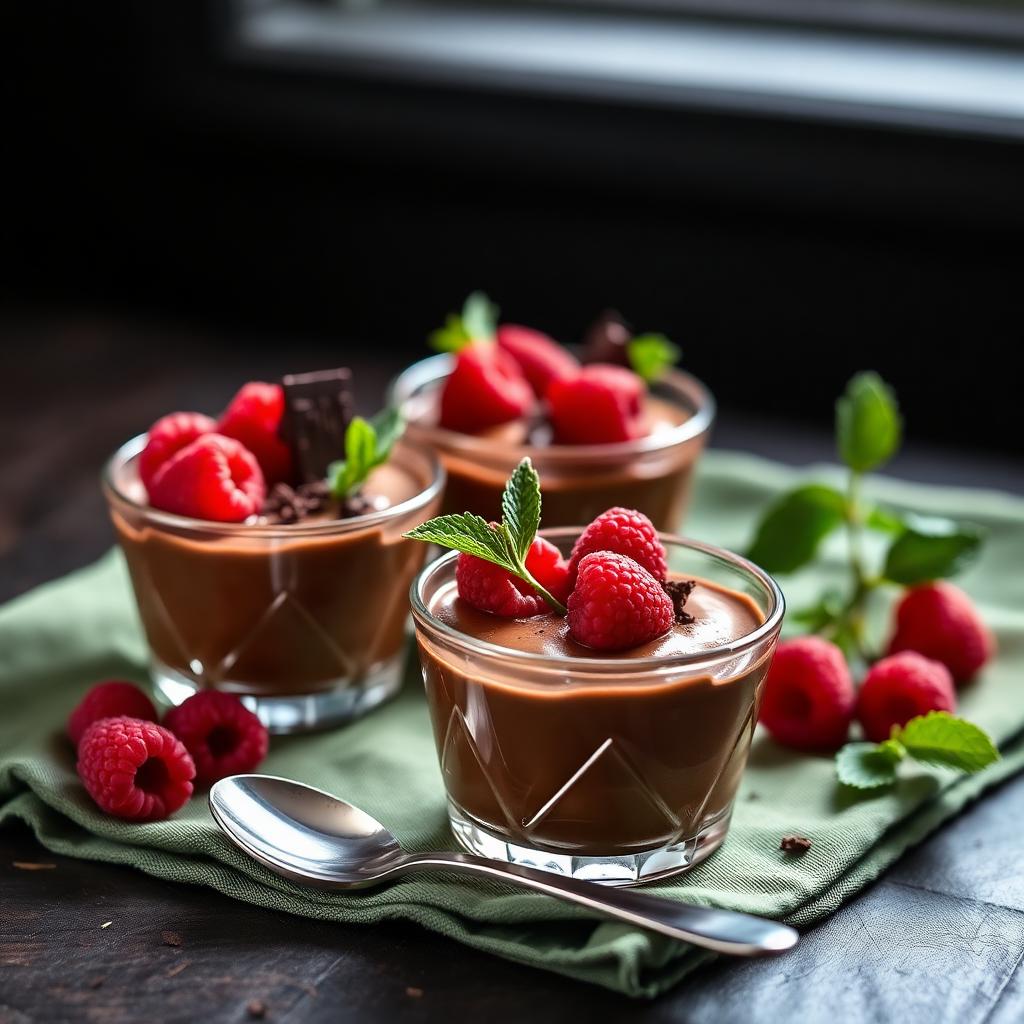
Just before serving, top with fresh raspberries, a few shavings of 90% dark chocolate, and a mint leaf for contrast.
Nutrition (per serving)
- Calories
- 245
- Fat
- 22 g
- Protein
- 3 g
- Total Carbs
- 14 g
- Fiber
- 10 g
- Net Carbs
- 4 g
Values are estimates calculated from typical ingredient databases. See our disclaimer.
Storage
Cover tightly with plastic wrap pressed directly onto the surface (to prevent oxidation) and refrigerate for up to 3 days. The color deepens slightly overnight, which is normal. Not recommended for freezing — the texture turns icy and separates on thawing.
Expert tips
- Powdered sweetener is non-negotiable. Granular erythritol will not dissolve and leaves a sandy mouthfeel. Blitz granulated in a spice grinder for 15 seconds if that's all you have.
- Dutch-process cocoa is smoother and less astringent than natural cocoa; both work but Dutch-process is a noticeable upgrade.
- The espresso powder does not make the mousse taste like coffee — it amplifies the chocolate the way a pinch of salt amplifies caramel.
- For an even richer dessert, fold 1/2 cup of separately whipped heavy cream into the finished mousse before chilling.
- Allulose gives the closest texture to sugar and browns slightly on top after 24 hours; erythritol stays paler but can leave a subtle cooling sensation.
Frequently asked questions
+Will this taste like avocado?
No. Ripe Hass avocado is neutral and buttery, and a full 1/3 cup of cocoa completely dominates the flavor. Blind taste tests routinely have people guessing dairy-based mousse or ganache. If yours tastes vegetal, the avocados were underripe — wait 24–48 hours for them to soften fully.
+Why is this only 4 g net carbs?
Avocado is unusually high in fiber (about 10 g per medium fruit), so most of its carbs are non-digestible. Unsweetened cocoa contributes about 2 g net carbs per 1/3 cup, and allulose and erythritol are keto-friendly sweeteners that the FDA now allows subtracted from total carbs on the nutrition label. Total: roughly 4 g net carbs per serving.
+Can I use stevia or monk fruit drops instead?
Yes for flavor, but you'll lose bulk. Powdered sweeteners contribute body and help stabilize the mousse. If using drops, add 2 additional tablespoons of coconut cream to compensate for the lost volume, and start with 15–20 drops, tasting as you go.
+Is coconut cream better than heavy cream here?
Both work beautifully. Coconut cream (from the top of a chilled can of full-fat coconut milk) gives a slightly firmer, dairy-free result with a subtle tropical note. Heavy cream is silkier and more neutral. For serving to guests, heavy cream is the safer bet; for dairy-free households, coconut cream is excellent.
+Can kids eat this?
Yes — this is one of the most nutrient-dense desserts you can serve children. Omit the espresso powder for kids under 12 (it doesn't affect the flavor dramatically) and consider swapping allulose for monk fruit blend, which has zero laxative threshold.
+How is this different from regular chocolate mousse?
Traditional French mousse au chocolat is built on whipped egg whites and melted chocolate, with air folded in for lift. This version uses the natural fat and pectin in avocado to create a denser, ganache-like texture — closer to a chocolate pot de crème than a classic airy mousse. No raw eggs, no double-boiler, no risk of seizing chocolate.
Everything you need to know
In-depth guide · reviewed by our editorial team · approx. 15 min read
Why This Is the Best Keto Chocolate Dessert You Can Make in 10 Minutes
Keto desserts have a credibility problem. For every genuinely great low-carb sweet treat, there are ten Pinterest-perfect photos hiding a sandy, cooling, oddly-textured reality — the kind of dessert you serve to yourself but would never serve to a dinner guest. Chocolate avocado mousse is the exception. Done well, it rivals a classic French pot de crème in richness and gloss, comes together in a single blender in under 10 minutes, and lands at just 4 grams of net carbs per generous serving. Done poorly, it tastes like guacamole with chocolate syrup on top. The difference is in a handful of small technique decisions that this guide will walk through in detail.
This recipe has been on our test-kitchen rotation for four years, refined across dozens of iterations. It's the dessert we bring to keto skeptics — the one that quietly ends the argument about whether low-carb food can taste as good as the original. It's also one of the most nutrient-dense desserts you can make: a serving delivers 10 grams of fiber, a full day's worth of monounsaturated fats, magnesium, potassium, and the flavanols that make dark chocolate genuinely functional food. The health halo is real, and it's earned.
Below we cover what actually makes this recipe work: the science of why avocado creates a mousse-like texture, the sweetener choice that will determine whether your dessert tastes like a restaurant or a mistake, common troubleshooting fixes, and how to fit this dessert into a broader ketogenic strategy without stalling your progress.
The Macros: How This Fits a Ketogenic Day
Per serving (one of four ramekins), this mousse delivers approximately 245 calories, 22 grams of fat, 3 grams of protein, 14 grams of total carbohydrates, 10 grams of fiber, and 4 grams of net carbohydrate. That's an 80% fat, 5% protein, 15% carb split by calories — heavily fat-dominant, exactly what you want from a ketogenic dessert that shouldn't push you toward gluconeogenesis or trigger an insulin response.
The 4 grams of net carbs represent roughly 20% of a strict 20-gram daily ketogenic budget, or 8% of a more moderate 50-gram low-carb budget. That's small enough to fit comfortably into almost any keto meal plan, even on a day when you've eaten other carb-containing whole foods like leafy greens, berries, or nuts. If you're running a therapeutic ketogenic protocol (for epilepsy or specific medical conditions) with a stricter carb ceiling, halve the serving size or skip the raspberry garnish, which adds about 2 additional grams of net carbs.
The fat quality is where this dessert really shines. Avocado's fat is roughly 70% monounsaturated (primarily oleic acid, the same fatty acid that makes olive oil a Mediterranean-diet superstar), and coconut cream contributes medium-chain triglycerides that the liver preferentially converts to ketones. Compare this to a slice of conventional chocolate cake, which delivers 25+ grams of refined sugar, seed oils, and inflammatory trans-fat traces from packaged frostings — the fat profile alone puts this dessert in a completely different nutritional category.
The Science: Why Avocado Creates a Mousse-Like Texture
Traditional French chocolate mousse relies on air. Whipped egg whites, whipped cream, or both are folded into melted chocolate to create the characteristic light, airy structure. The mousse holds its shape because the beaten proteins form a stable foam that traps air bubbles, and the melted chocolate solidifies around them as it cools. It's beautiful, temperamental, and requires a working knowledge of when to stop whipping and how to fold without deflating.
Avocado-based mousse works on completely different principles. Ripe Hass avocado is roughly 15% fat, 3% carbohydrate (most of it fiber), and 80% water — but that water is bound inside plant cell walls made of pectin, hemicellulose, and cellulose. When you blend a ripe avocado on high speed, the mechanical action ruptures those cell walls and releases both the fat and the structural fiber into a smooth emulsion. Add cocoa fat (from the cocoa powder) and cream fat (from coconut cream or heavy cream), and you get a stable three-way emulsion: avocado oil, cocoa butter, and dairy or coconut fat all suspended in the small amount of remaining water, held together by the pectin and fiber from the avocado.
The result is a texture that's closer to a ganache or pot de crème than to a classic airy mousse. It's denser, richer, and more spoon-coating — which most keto eaters actually prefer, because it feels more indulgent per bite. The bonus: no raw eggs, no risk of seizing chocolate over a double boiler, no whipped-cream over-beating disasters. Just blend and chill.
This is also why ripeness matters so much. An underripe avocado has cell walls that resist blending, leaving fibrous flecks in the finished mousse. A slightly overripe avocado (with brown spots throughout the flesh, not just on the outside) breaks down completely and produces the smoothest, silkiest result. If you can press a gentle finger into the stem end and it yields easily without denting the fruit, you're at peak ripeness for mousse-making.
Ingredient Deep-Dive: Choosing the Right Sweetener
The sweetener choice is the single most important variable in a keto dessert, and it determines whether your mousse tastes like a restaurant version or a chemistry experiment. There are three viable options for this recipe, each with distinct trade-offs.
Allulose is our top recommendation. It's a rare sugar that occurs naturally in figs, raisins, and jackfruit, and it behaves in cooking almost identically to regular sucrose — it browns, dissolves, and provides the same mouthfeel and body. Crucially, it does not cause the cooling sensation that erythritol produces, and it has no laxative threshold at moderate doses. The FDA excludes allulose from total and added sugar labels, so the 1/3 cup used in this recipe contributes essentially zero glycemic carbs. The only downside is price — allulose runs about 3× the cost of erythritol.
Erythritol-monk fruit blends (brands like Lakanto, Swerve, Besti) are the second-best option and the more common choice. They provide bulk and sweetness at a similar 1:1 ratio to sugar, and they're widely available in every grocery store. The trade-offs: erythritol produces a subtle cooling sensation on the tongue (like sucking a mint), and some people experience GI distress at doses above 40 grams in a single sitting. The 1/3 cup called for in this recipe divided across four servings puts each portion well under the threshold for most people.
Pure powdered stevia or monk fruit drops are the third option, and the one to use if you're avoiding sugar alcohols entirely. Because they're 200–400× sweeter than sugar by weight, you need only a tiny amount — but you also lose the bulking effect that gives the mousse body. If you go this route, add 2 additional tablespoons of coconut cream to compensate for the lost volume, and start with 15–20 drops of concentrated stevia, tasting as you go. Over-sweetening with stevia produces a lingering bitter aftertaste that no amount of chocolate can hide.
Whatever sweetener you choose, powdered is non-negotiable. Granulated erythritol or allulose will not dissolve during a 90-second blend, and the finished mousse will have a sandy, gritty mouthfeel that ruins the whole dessert. If your grocery store only stocks granulated, blitz it in a spice grinder or high-powered blender for 15 seconds until it's a fine powder, then measure.
Ingredient Deep-Dive: Cocoa Powder and Chocolate Selection
Cocoa powder is where most home cooks under-invest in this recipe. The difference between a 3-dollar canister of Hershey's natural cocoa and a 12-dollar tin of Valrhona Dutch-process is enormous — and in a recipe where cocoa is the dominant flavor, that difference is the whole dessert.
Natural cocoa powder is untreated, acidic (pH around 5), and delivers a sharper, more astringent chocolate flavor. It works, but it needs more sweetener to balance. Dutch-process cocoa has been treated with alkali to neutralize its acidity (pH around 7), producing a smoother, deeper, more rounded chocolate flavor with less bitterness. It's the standard in professional kitchens for a reason. If you're only going to make one investment upgrade in this recipe, make it a good Dutch-process cocoa.
The best options widely available in US grocery stores: Valrhona (the gold standard, sold at Whole Foods and specialty stores), Guittard Cocoa Rouge (excellent value, sold at Trader Joe's and Amazon), Droste (a classic Dutch brand, widely available), and Ghirardelli Premium Baking Cocoa (a solid budget choice at any supermarket). Avoid the standard supermarket store brands — they're almost always natural cocoa mislabeled or a low-fat 'cocoa flavor' powder that lacks the fat needed for a proper emulsion.
Sift the cocoa. This is the number one troubleshooting fix for gritty mousse. Cocoa powder clumps in storage, and those clumps will not fully break down in a blender no matter how long you run it — they end up as small bitter pockets throughout the finished mousse. A 15-second pass through a fine-mesh sieve directly into the blender solves the problem completely.
The optional shaved 90% dark chocolate garnish is an easy quality upgrade. Look for single-origin bars from brands like Lindt Excellence 90%, Green & Black's 85%, or Alter Eco 90% — all under 3 grams of net carbs per 10-gram serving (about half a square). The bitterness and slight snap of a good high-percentage dark chocolate provides textural and flavor contrast against the smooth mousse.
Step-by-Step Technique Notes
The recipe itself takes 10 minutes, but a few technique details separate a good result from a great one.
First, avocado selection. As covered above, ripeness is everything. If your avocados feel firm, put them in a paper bag with a banana for 24 hours — the ethylene gas from the banana accelerates ripening dramatically. Do not attempt this recipe with an underripe avocado; the texture will be irrecoverably grainy.
Second, ingredient order matters more than most recipes admit. Add the avocado flesh to the blender first, then sift the cocoa on top, then add the powdered sweetener, then pour the cream on top of that. Adding the cream first means the powder floats and doesn't blend evenly; adding it last means it flows down through the powder as the blender starts, distributing everything smoothly.
Third, blending in two stages produces a better result than one long blend. A 30-second medium-speed blend breaks up the largest chunks of avocado; a scrape-down and 60–90 second high-speed blend finishes the emulsion. One continuous 2-minute blend at high speed tends to over-warm the mixture (blender friction can raise the temperature 10–15°F), which can break the emulsion and leave the mousse looking slightly separated.
Fourth, do not skip the espresso powder unless you're serving small children. It contributes no coffee flavor at 1 teaspoon across 4 servings — you cannot taste it. What it does is amplify the chocolate perception the same way a pinch of salt amplifies caramel or a squeeze of lemon amplifies fruit. Every professional pastry kitchen adds espresso to chocolate desserts for exactly this reason.
Fifth, the chill time is real. The mousse is edible straight out of the blender, but 30 minutes in the refrigerator dramatically improves both texture (it firms up from pudding-loose to spoon-standing) and flavor (the cocoa fully hydrates and the sweetener integrates). An overnight chill produces the best possible version — make this dessert the night before you plan to serve it.
Substitutions and Variations
This recipe is remarkably forgiving to adaptation once you understand the core structure. The role of each ingredient: avocado provides body and fat; cocoa provides flavor; sweetener provides sweetness and bulk; cream provides silkiness and additional fat; vanilla and salt round out and amplify flavor. Substitutions that respect these roles will succeed.
Dairy-free: coconut cream instead of heavy cream is the standard swap, and it's excellent. Choose a full-fat canned coconut milk, refrigerate the can overnight, and scoop only the thick white cream from the top (save the thin water for smoothies). Aroy-D and Native Forest are our preferred brands — they're additive-free and consistent from can to can.
Espresso mousse: increase the espresso powder to 1 tablespoon and add a splash of instant coffee — you get a mocha-forward dessert that's especially good for adult dinner parties.
Peanut butter mousse: add 2 tablespoons of natural peanut butter (Smucker's Natural or any brand that's just peanuts and salt). Adds about 2 g net carbs per serving. The peanut-chocolate combination is one of the most satisfying keto desserts we've tested.
Berry ripple: swirl 2 tablespoons of no-sugar-added raspberry preserves through the finished mousse before chilling for a bakery-window presentation. Adds about 1 g net carbs per serving.
Mint chocolate: replace the vanilla with 1/2 teaspoon of pure peppermint extract. Refreshing, especially in summer.
Mousse cake: pour the mousse over a pre-baked keto almond-flour cookie base, chill for 4+ hours, and slice into wedges for a full dessert-course presentation.
For a fluffier, more traditional mousse texture, whip 1/2 cup of heavy cream to stiff peaks in a separate bowl and gently fold it into the finished mousse before chilling. This aerates the base and produces a lighter, more classical French-style result — worth the extra 3 minutes if you're serving guests.
Troubleshooting: Fixing Common Problems
My mousse tastes like avocado. Two causes. Either the avocados were underripe (fibrous, vegetal flavor that comes through even under cocoa) or you didn't use enough cocoa. The 1/3 cup called for is a minimum — if you're using a milder cocoa brand, bump it to 1/2 cup. And check your avocado ripeness before starting.
My mousse is grainy. Almost always the sweetener — you used granulated instead of powdered. Blitz the granulated version in a spice grinder for 15 seconds and re-blend the mousse to rescue it. Second most common cause: unsifted cocoa that left clumps.
My mousse is too runny. Either your avocados were unusually small (target 150 g flesh per avocado; smaller avocados throw the ratio off), or you used regular coconut milk instead of the thick cream. Chill the mousse for a full 4 hours; if it still doesn't set, blend in one additional tablespoon of coconut cream to reset the emulsion.
My mousse is too thick. Rare but possible with especially large avocados. Thin with 1–2 tablespoons of heavy cream or coconut cream and re-blend for 20 seconds.
My mousse has an unpleasant aftertaste. Almost certainly the sweetener. Stevia in excess is bitter; erythritol at high doses produces a cooling menthol note some people dislike. Try switching to allulose — it has neither issue and produces the cleanest flavor of any keto sweetener.
My mousse turned brown on top after a few hours. This is normal oxidation, exactly like guacamole turning brown. It's harmless and won't affect flavor. Pressing plastic wrap directly onto the surface (not just over the top of the ramekin) before chilling prevents it entirely.
Serving Ideas and Presentation
For a home weeknight dessert, spoon into small mason jars or ramekins, top with a few fresh raspberries, and serve straight from the fridge. Total effort: 30 seconds of plating.
For a dinner party, layer the mousse in champagne coupes or small glass cups with an intermediate layer of lightly whipped heavy cream in the middle, then finish with shaved dark chocolate, a raspberry, and a mint leaf. The visible layers make it look like a professional plated dessert with almost zero additional effort.
For a special occasion, spoon the mousse into a piping bag fitted with a large star tip and pipe into small serving glasses in a rosette pattern. Chill for 2 hours to fully set the piped shape. Top with a light dusting of extra sifted cocoa and a single edible flower.
Pair the mousse with a small espresso, an unsweetened almond milk cappuccino, or (for adults) a small pour of dry red wine — a Pinot Noir or lighter Cabernet complements the dark chocolate beautifully without adding meaningful carbs. Skip dessert wines and ports, which are sugar-heavy.
For an even more indulgent presentation, warm 2 tablespoons of heavy cream with 1 tablespoon of sugar-free chocolate chips until melted, then drizzle over the chilled mousse just before serving. Adds about 1 g net carbs per serving and turns the dessert into something that would be at home on a Michelin-starred menu.
Meal Planning and Sustainability Notes
One of the questions we get most often is whether daily keto dessert is a good idea, or whether it's a slippery slope that leads to stalled progress. The honest answer: it depends on your goals and your relationship with sweet flavors.
For weight loss, occasional keto dessert (2–3 times per week) is fine for most people and can dramatically improve dietary adherence — the ability to eat a satisfying sweet without breaking ketosis is one of the biggest sustainability advantages the diet has over calorie-only approaches. Daily dessert can become a problem if it drives calorie intake above maintenance or trains you to expect a sweet finish to every meal (which can perpetuate carb cravings rather than resolve them).
For metabolic health improvements without weight loss goals, this dessert is nearly ideal — high fat, high fiber, low glycemic load, and rich in polyphenols from cocoa (which have documented positive effects on endothelial function and blood pressure per multiple meta-analyses). Once daily is a reasonable inclusion for most metabolically healthy adults.
For anyone with a history of disordered eating or a strong sweet-food compulsion, we recommend introducing keto desserts carefully and observing how they affect your relationship with food. Some people find that keto sweets satisfy cravings and remove them entirely; others find that the sweet flavor triggers more sweet-seeking behavior. Self-knowledge matters more than any general recommendation.
Make-ahead strategy: this mousse holds in the fridge for 3 days without any texture degradation, which makes it excellent for meal-prep or dinner-party preparation. Make a double batch on Sunday, portion into 8 small ramekins, and you have a keto-friendly dessert ready to serve every night of the week with zero additional effort.
Frequently Asked Questions
Will this really not taste like avocado? Ripe Hass avocado combined with 1/3 cup of cocoa produces a dessert that blind taste tests routinely have people guessing as classic French pot de crème or ganache. If yours tastes vegetal, the avocados were not ripe enough — this is the single most common cause of avocado flavor bleed-through. Wait 24–48 hours for the fruit to soften fully before making the recipe.
Can I make this in a food processor instead of a blender? Yes — a food processor works well, though you may need to scrape down the sides more often. A high-powered blender (Vitamix, Blendtec, Ninja) produces the smoothest possible result. A standard 500-watt blender will work but may need an extra 30–60 seconds of run time and more aggressive scraping.
Is this recipe keto-approved for the strict 20 g daily carb protocol? Yes. At 4 g net carbs per serving, it fits comfortably into even the strictest ketogenic macros, occupying 20% of a 20 g daily budget. Pair with lower-carb meals on the same day if you want to leave room for other treats or vegetables.
How long will this last in the fridge? Three days, covered tightly with plastic wrap pressed directly onto the surface to prevent oxidation. The flavor actually improves on day 2 as the cocoa fully hydrates.
Can I freeze the mousse? Not recommended. Freezing breaks the emulsion — the fat separates from the water on thawing, producing an icy, grainy texture that no amount of re-blending will fix. Make fresh batches.
Is dark chocolate really healthy? Yes, at reasonable doses. Cocoa is one of the most polyphenol-rich foods on earth, and dark chocolate consumption is associated with improved endothelial function, modestly lower blood pressure, and improved insulin sensitivity in multiple systematic reviews (Cochrane Database, 2017; Journal of Nutrition, 2011). The caveat: these benefits are dose-dependent and disappear when the chocolate is sweetened with sugar — which is why keto-adapted preparations like this mousse are functionally healthier than commercial dark-chocolate desserts.
Is allulose safe? Yes, based on all available evidence. It's approved by the FDA as GRAS (Generally Recognized as Safe), it does not raise blood glucose or insulin, and it does not cause the GI distress associated with sugar alcohols at moderate doses. The Japanese have used it in commercial food products for over a decade with no documented long-term safety concerns.
References
Avocado nutrition and fiber content data from USDA FoodData Central. Monounsaturated fat health effects reviewed in Schwingshackl et al., 'Monounsaturated fatty acids, olive oil and health status' (Lipids in Health and Disease, 2014). Cocoa flavanol cardiovascular benefits from Ried et al., 'Effect of cocoa on blood pressure' (Cochrane Database Systematic Reviews, 2017) and Buijsse et al., 'Cocoa intake, blood pressure, and cardiovascular mortality' (Archives of Internal Medicine, 2006). Allulose metabolism and safety from Han et al., 'Rare sugar D-allulose: physiological effects and applications' (Nutrients, 2020) and FDA GRAS Notice 400. Erythritol tolerance and dosing from Storey et al., 'Gastrointestinal tolerance of erythritol' (European Journal of Clinical Nutrition, 2007). Emulsion science from Harold McGee, On Food and Cooking (2nd ed, 2004).
This is general nutrition information, not medical advice. Consult your healthcare provider before starting a ketogenic diet, especially if you are pregnant, breastfeeding, taking medication for diabetes or blood pressure, or managing kidney or liver disease.
Related recipes
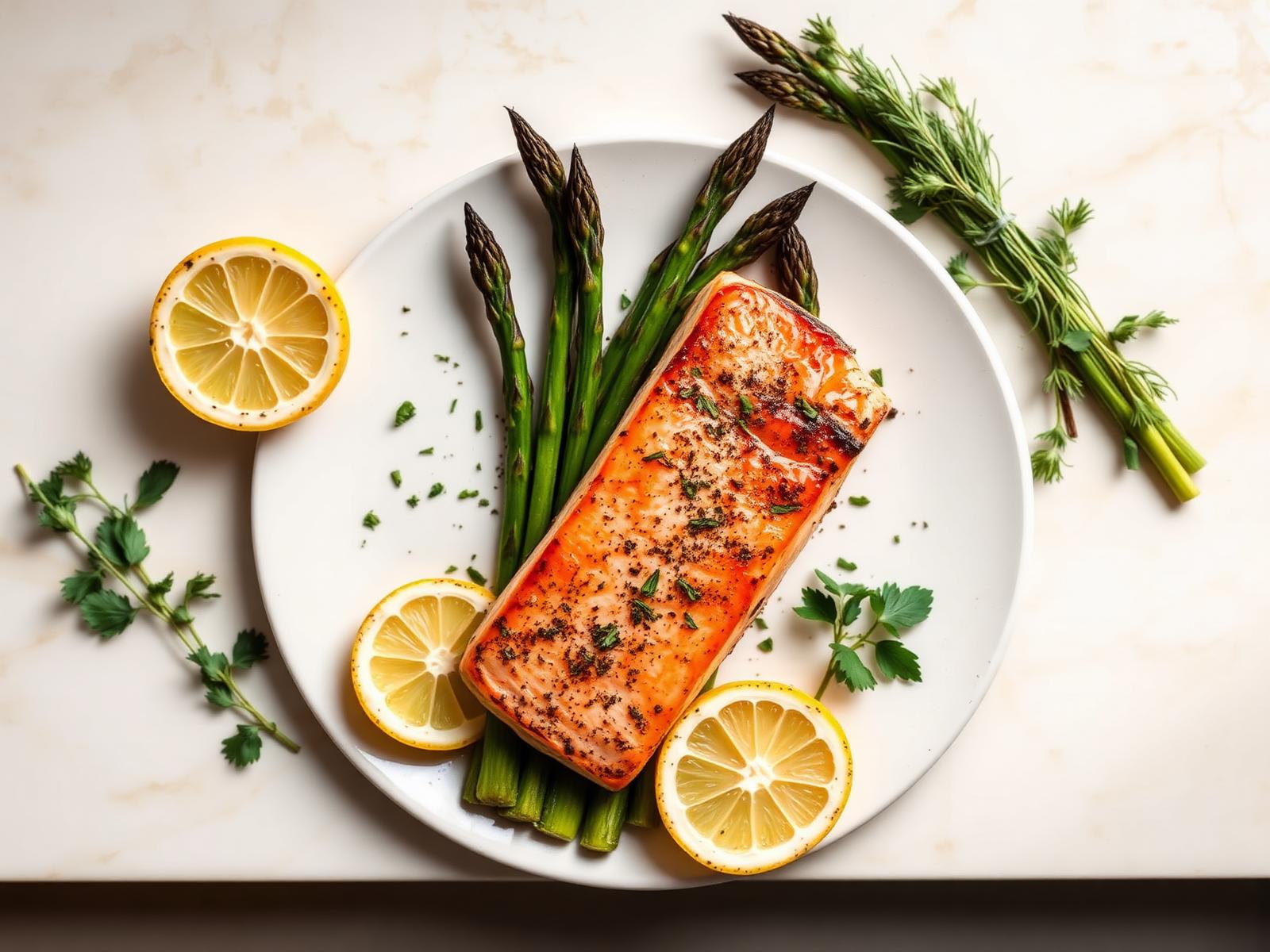
Pan-Seared Salmon with Lemon Asparagus
A restaurant-quality keto dinner that comes together in a single skillet in under 25 minutes. Crispy-skinned wild salmon, bright lemon, and tender roasted asparagus deliver a full plate of protein and heart-healthy fats with just 4 g net carbs.
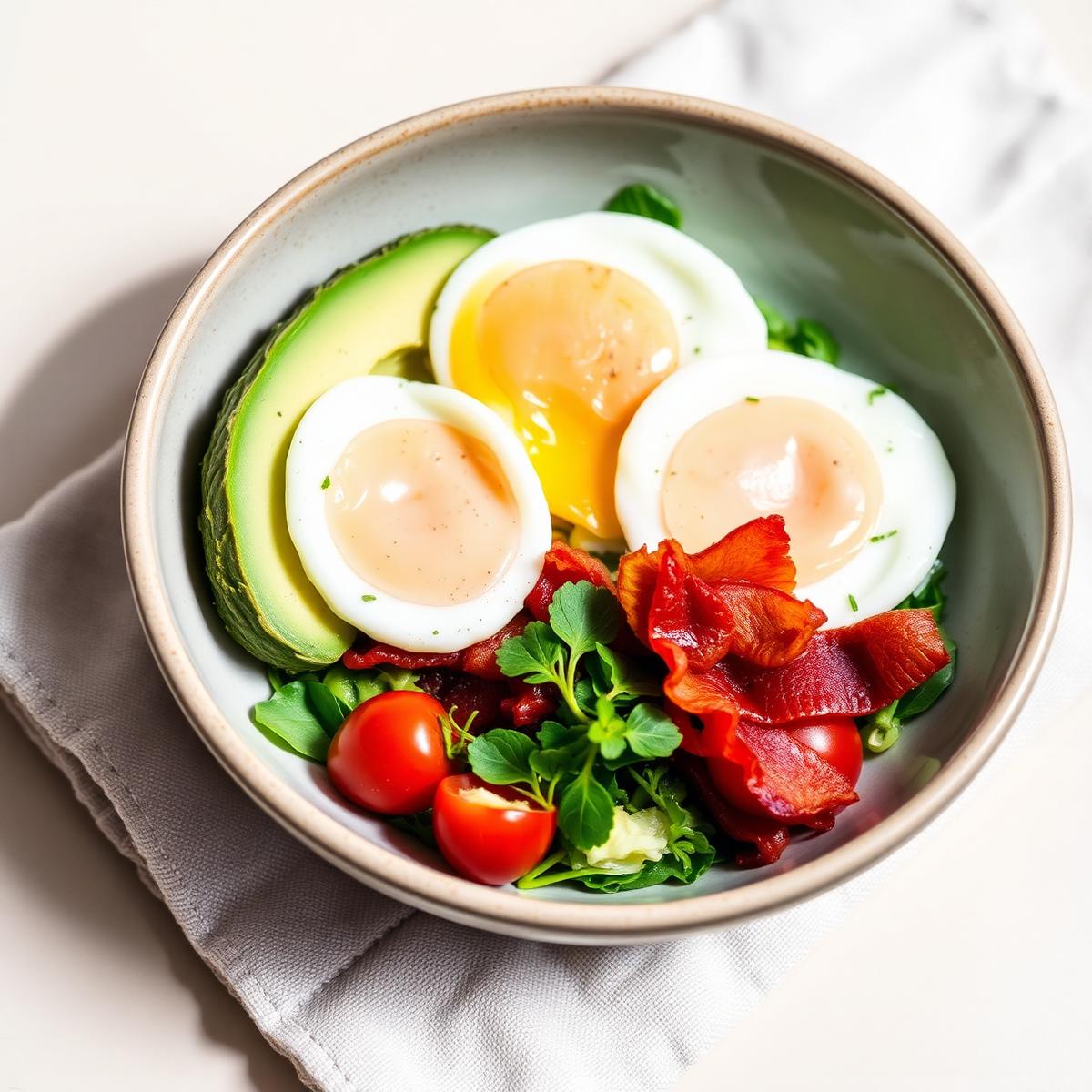
Avocado Breakfast Bowl with Soft-Boiled Eggs
A vibrant morning bowl that combines creamy avocado, jammy soft-boiled eggs, and crisp bacon for a keto breakfast that keeps you full for hours. Perfect for busy weekdays — most of it can be prepped ahead.
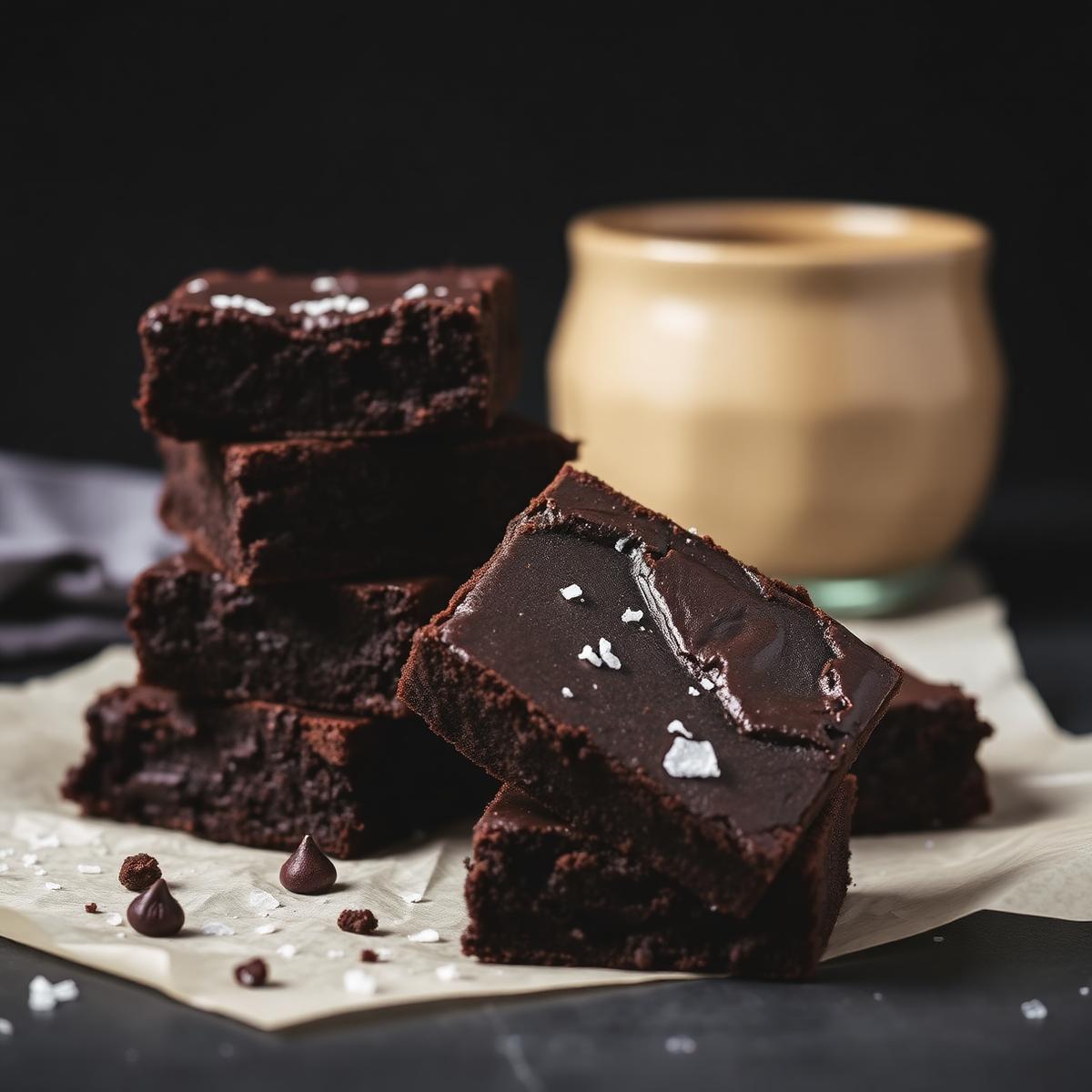
Fudgy Almond-Flour Chocolate Brownies
The keto brownie recipe our test kitchen makes on repeat. Rich, fudgy, and deeply chocolatey — with a shiny crackly top and only 2 g net carbs per square. No one will guess they're sugar-free and grain-free.