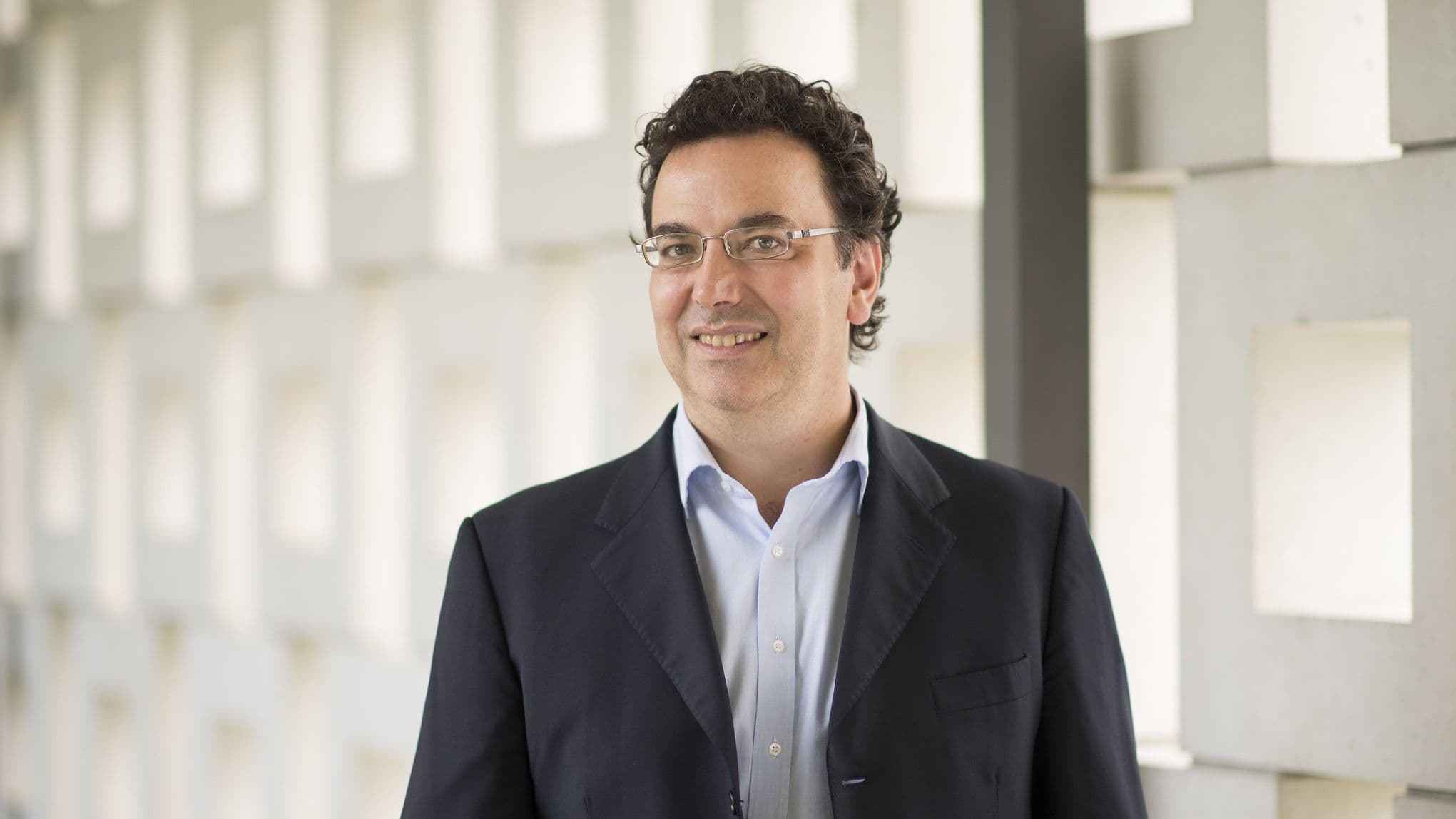
IBM Research and ETH Zurich recently signed a new research agreement, with the aim of creating the algorithmic underpinnings of the next era of computing. This partnership has been around for a long time, with the IBM-ETH relationship dating back 70 years, to the very beginning of IBM’s presence in Zurich.
The founding director of the Zurich lab, Ambrose Speiser, was a junior professor of computer science at Eidgenössische Technische Hochschule (ETH), hired by Thomas Watson Jr. himself to build the first European lab with the continent’s brightest minds. “It turned out – not by accident – that the new IBM laboratory in Zurich was an attractive proposition for young engineers looking for positions,” Speiser later wrote in the IEEE Annals of the History of Computing. As a result, it was not difficult to gather a group of talented people.
Possible was an understatement. Far from IBM’s main laboratory in New York, IBM Zurich grew into a scientific powerhouse in its own right, with two Nobel Prizes to its name and discoveries that helped pave the way for nanoscale semiconductors and electronics, as well as high-performance scientific computing.
IBM’s close relationship with ETH Zurich has been part of the winning formula. ETH has provided new talent to IBM, and sometimes vice versa, when old researchers leave IBM to teach at ETH, ensuring a constant exchange of ideas between academics and industry and applied science.
The high reputation of the laboratory attracted Alessandro Curioni, then a PhD student at the Italian high school Scuola Normale Superiori in Pisa. He came as a student at IBM Research Zurich, then a hotbed of computational chemistry, and never left, except to return to Pisa to finish his PhD.
As a researcher, he applied supercomputers to scientific problems, eventually earning the title of IBM Fellow for his work. In 2016, Curioni joined the administration as Vice President for Europe and Africa, and head of the Zurich laboratory where he started as a student twenty years earlier. We recently sat down with him to talk about the next chapter of IBM and ETH, and what the ‘AI times quantum’ vision for the future of computing looks like.
The Zurich lab turns 70 this year – it’s funny to think that it all started with an ETH professor! It has been an ongoing story of exchange, collaboration, and success on both sides, with unique organizations in the world. ETH Zurich is one of the best universities in Europe, with 22 Nobel Prizes, including the one that went to Albert Einstein, its most famous alumnus. And IBM is one of the oldest and most enduring technology companies in the world, with six Nobel Prizes and 7 Turing Awards. It is important to look at this as just a new chapter.
What will the next chapter be about?
We are creating an algorithmic foundation for the future of computing where quantum information theory and classical information theory converge, augmenting our current systems and enabling entirely new ones. This fundamental change will affect 95% of the problems we are trying to solve in science and business. IBM’s investment will support students and projects in classical and quantum algorithms.
You came to the lab in 2006 as a student – what brought you there?
IBM Research Zurich has collaborated with ETH under the framework of the C4 Community for Computational Chemistry. I came during my PhD because it was the main place to do computational chemistry. When I arrived in Zurich, I found the best place in the world to do research.
When you became a full-time scientist, what did you do?
At that time, I had primitive instruments for simulating molecules in a measured way. I used the world’s first IBM Power machines to do science with ETH and C4. Then we went to the same computers trying to use old computers to do quantum simulations, we hit all the possible walls. Fifteen years ago, I started with IBM Blue Gene and parallel computing to try to solve interesting problems outside of chemistry. We worked together to create a powerful fluid simulation that simulates clouds of bubbles collapsing under pressure and won the 2013 ACM Gordon Bell award.
And now the second prize two years later!
The 2015 ACM Gordon Bell Award was for another HPC project, this time simulating the flow of the Earth’s mantle to understand the forces behind earthquakes.
What other projects has IBM Research run with ETH Zurich?
We built a nanotechnology center in 2011. It was the first major public and private investment in Switzerland, and it was born from the scanning tunnel microscope (STM), which was invented in our lab by IBM physicists Gerd Binnig and Heinrich Rohrer, who himself was an ETH student. They both received the Nobel Prize in physics in 1986. Their work was important because it gave us a way to visualize and control nature, atom by atom, and it gave birth to nanotechnology.
What is the best part of working in Zurich?
It is out of the list of innovations and quality of life. IBM was the first technology company to come here, adjacent to the ETH campus. Today there are Google, Meta, OpenAI, and others. The city is attracting the best minds from around the world. A few years ago, ETH was able to find Alesso Figalli, a mathematician who won the Fields Medal in 2018. You work here because of the environment.
What excites you most about the future?
Quantum will greatly reduce the computational complexity of simulating nature. It will remove the obstacle that limited the work we could do in the past. We used old computers to simulate the same things we are trying to simulate today, but the complexity of the computer was so bad that when you expanded the system or increased the accuracy, you hit a wall and couldn’t continue. It was confusing as a scientist. You wanted to change the world, but you couldn’t.
When you repeatedly hit a wall in your plans what kept you going?
I focused on making incremental improvements. I did this for many years, first by simulating molecules, then molecules in solvent, then molecules in interfaces, to get something better and more accurate. But I felt like Don Quixote fighting the factory. I pushed the wall an inch at a time, waiting for the magic to happen.
What made you decide to become a manager?
Once I received IBM’s highest technical honor, Fellow IBM, I felt I needed a new challenge. It had been my dream to win the Nobel Prize since I was 20 years old, after hearing the news that IBM Zurich researchers had won the STM prize. At one point I realized that the chance of winning the Nobel was not that great. I thought I could do more for the company and the world by pushing the new generation. Arvind’s house [Krishna, then Research Director] he asked me to lead the Zurich lab, I took one night to say yes.
How will AI affect the future of quantum research?
The future will not be AI together with quantum, but AI has many opportunities because quantum computing will be more extensive than it is today. Quantum will be the enabling technology. Classical computing will be part of quantum computing just as classical mechanics is part of quantum mechanics. This quantum computing engine will make AI even more powerful. Meanwhile, AI has made quantum even more powerful.
We use today’s AI to design new quantum and classical algorithms and run them on machines more efficiently. AI can help us make complex simulations autonomously. Once quantum becomes the basis of computing, high-speed AI will become even more powerful. AI quantum moments will have a multiplier effect.
Where will ‘AI x quantum’ have the biggest impact?
Quantum mechanics was originally conceived to explain problems in physics that classical mechanics could not. How something can be a particle and a wave at the same time. Later, we realized that quantum mechanics is superior to classical mechanics. We arrived at quantum computing by realizing that some problems were inefficient for primitive computers. Imitating nature is one of them. We’ve been talking forever about digital twins, and building biologically accurate models, but digital twins have so far been poor carbon copies.
If you could simulate a part of nature with a quantum computer, what would it be?
One of the problems where I hit a wall was simulating batteries. We have worked on a project to develop new lithium-air batteries to revolutionize energy storage. As quantum computing develops, I think we will be able to study these processes more accurately. To simulate a device like a battery and create a true digital twin, we need to combine Hamiltonian simulations with stochastic processes.
So where does ‘AI x quantum’ come in?
Just fine. With the best classical and quantum algorithms we can multiply their power. That’s why this collaboration is so exciting. How many places in the world can you say you have technology and skills, but also heritage? IBM and ETH planted the seeds of nanotechnology and computational chemistry and nurtured these fields together. Now, we can do it again for the computer.
#Research #IBM #ETH #Zurich #opens #era #innovation