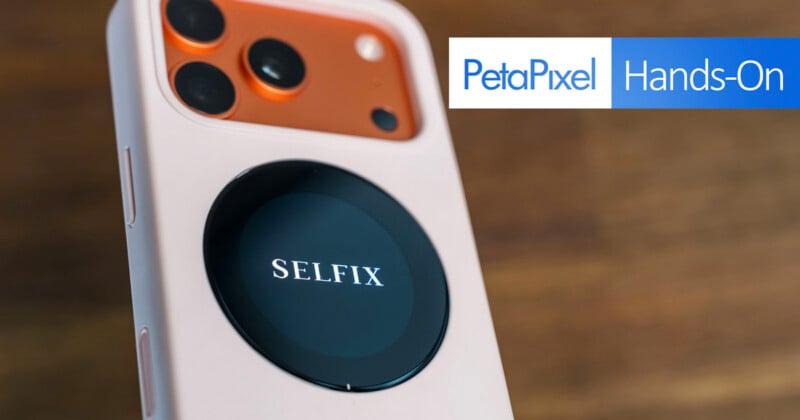
If you ask me, some of the worst smartphone photos are the ones people take with front-facing cameras. Smaller sensors, smaller lenses, and less hardware are big reasons, and as rear cameras continue to evolve (some more than others, anyway), products are released to encourage users to replace their phones and use rear lenses instead.
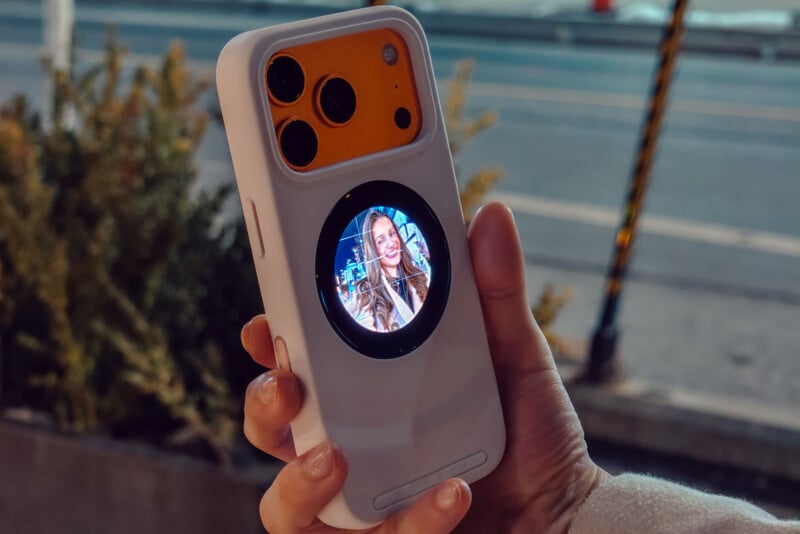
Dockcase’s Selfix isn’t quite a finished product yet, as it’s still going through a crowdfunding campaign, but it aims to offer an alternative to front-facing cameras with a circular display on the back. I am still using it to see how well it works. It is against growing competition, not only from devices already on the market, but also from users who are convinced to accept such a solution in this form.
Round Screen with Rectangular Peg
The Selfix is a case that doubles as a storage expander with a MicroSD card slot. Dockcase made this original transfer for the iPhone 17 Pro and 17 Pro Max only. It doesn’t have a built-in battery, although sliding the iPhone into the case’s USB-C plug means the phone’s battery ends up powering the rear screen. The USB-C port on the bottom provides a supercharger for the phone itself, negating any need to get out of the case.
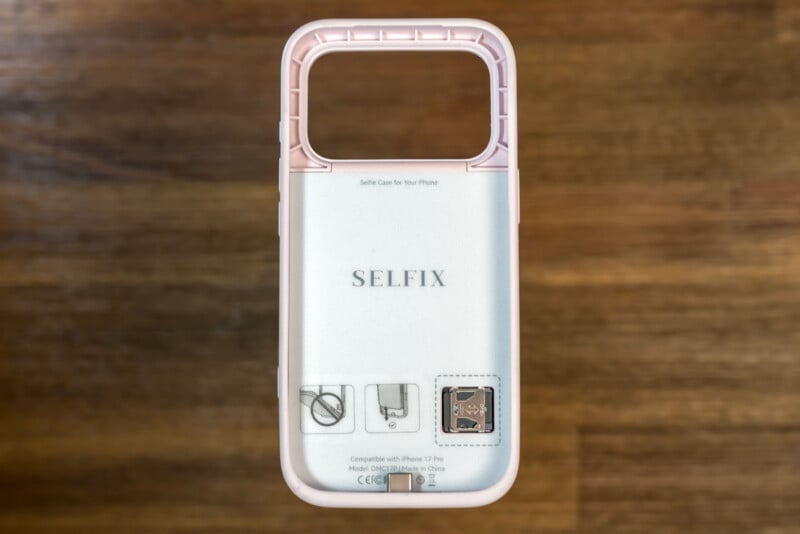
So, while the basic design is that you can use the rear screen to take selfies with the latest high-quality cameras, Dockcase bets that being a real protection case and offering a card slot makes Selfix stand out. It’s not an attachment like the SmallRig Wireless Video Monitor or the Insta360 Snap Selfie, both of which use MagSafe to stay connected to the iPhone.
In this case, you have a thick silicone case with a curved 1.6-inch (480 x 480) AMOLED screen placed on top of the MagSafe coils on the bottom of the phone. The current is still strong enough to connect MagSafe devices, but the increased distance between the coils and the wireless charging station prevents the iPhone from being recharged that way. That includes portable MagSafe chargers, though they can always be plugged into the back.
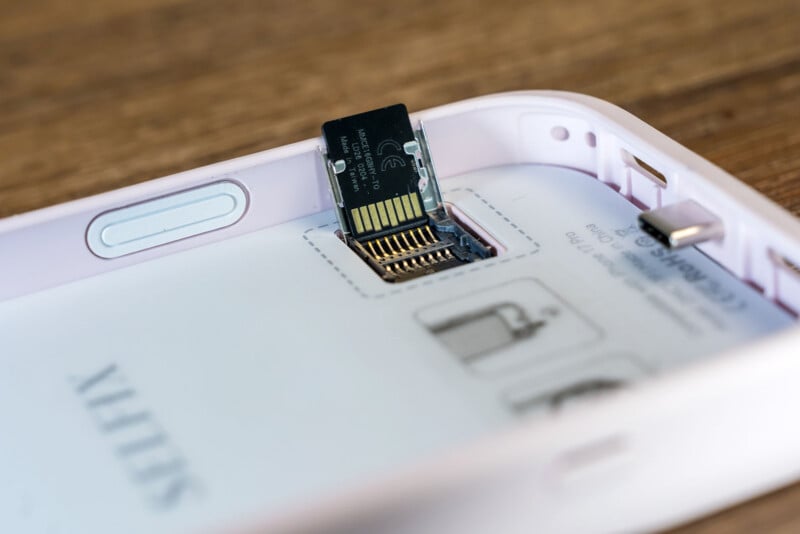
That brings up the issues right off the bat, although maintaining MagSafe magnetic access is nothing to scoff at, in my view. Then there’s the microSD card slot, which supports UHS-I cards (Class 10, U3, V30) up to 2TB, and acts as an internal storage expansion rather than connecting an external SSD. The catch is that iOS limits how expanded storage integrates with iPhone features.
For example, iOS only allows ProRes video recording directly to external storage. You can’t save regular photos or videos directly to the card, leaving you with the option to use Files or iPhone Photos to transfer or save image files after you’ve previously saved them to the phone’s internal storage.
Using Selfix for Selfies
Turning Selfix on is as easy as pressing and holding the power button below the phone’s volume buttons. It doesn’t use a dedicated device, and it doesn’t require firmware updates to work with compatible iPhones, although you do need to make a few software changes to activate the rear screen features. Under Settings > Accessibility > Click, open AssistiveTouch and add it to Control Center.
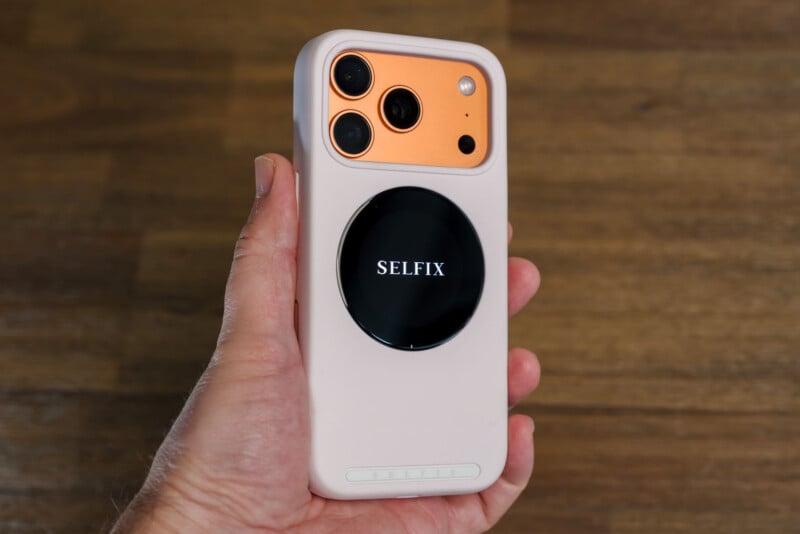
Doing this makes it possible to control the Camera’s on-screen controls from the rear screen – at least the ones you can see. It’s easy to tap to focus, but everything else requires some thought on your end. You tap the small numbers at the bottom of the screen to switch between the three rear cameras. Swipe left or right to change the zoom level. Swipe down to lock zoom. I can shoot by pressing the volume button, which acts as a shutter, or the in-app shutter to take a selfie. You generally have to use the big screen to change modes.
Since Selfix’s rear display actually mirrors the iPhone’s screen, pressing Selfix’s on/off button toggles vertical mode. From there, it’s very easy to create a round picture and take selfies. I find it easy to do that when selfies are said to be one-person shots. Add one, two, or more people for a group photo, and you need a long arm to make sure everyone is in the frame, unless you’re using a very wide lens.
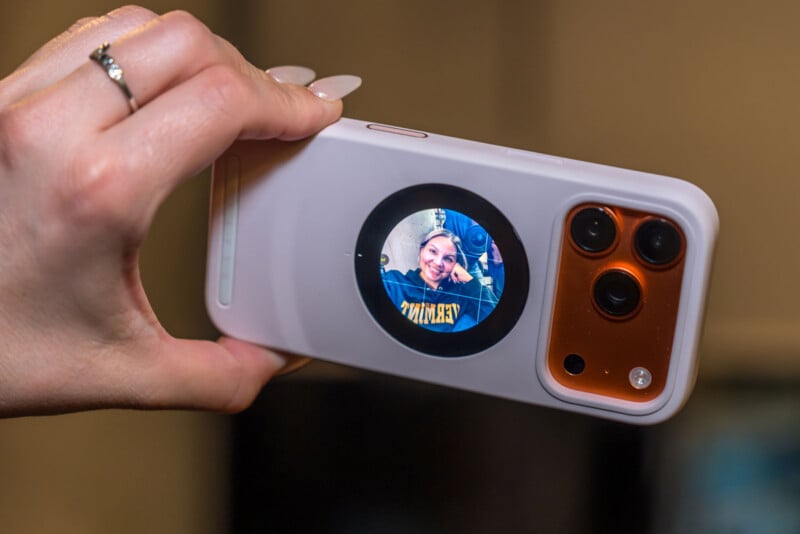
Tilting the phone in landscape mode leads to some strange situations. If you do it right after launching the Camera app, it rotates and looks normal. Click the button, though, and scroll down. Leave the device idle for a while (I’m not sure how long), and tilt it into place to keep the rear screen locked to portrait orientation.
I asked Dockcase why this is happening, and they responded, noting that Selfix still has limited functionality for landscape mode, suggesting enabling the iPhone to turn off before switching. This seems to do the trick as a way of working, although pressing the button is going sideways instead of up.
Working with Others
As I used the case, more nuances emerged. For example, Dockcase has optimized Selfix to work with Apple’s Camera app, leaving it in the dark with third-party apps. They technically work because the case is just a mirror of the phone, except you have no real control over the settings on the back. The volume button works as a shutter, but that’s about it.
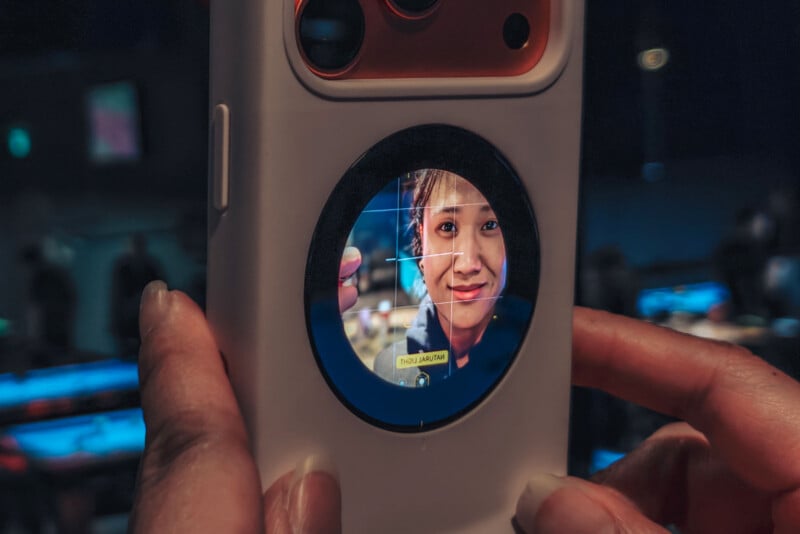
It’s not a bad thing, from my point of view, especially since the rear screen acts as a rearview mirror of sorts when trying to take a tight angle photo or fancy selfie. Additionally, while not optimized for video, the mirror makes the rear screen a useful monitor. It’s just that the small circular display doesn’t work as well as the rectangular screens the SmallRig and Insta360 have.
Those two competitors have a chance to make a living with Android users. They are agnostic and work well with any Android phone, especially those with MagSafe support (either built-in or in the case). That also adds support for iPhones going all the way back to the iPhone 12, thus making Selfix quite the pick in comparison.
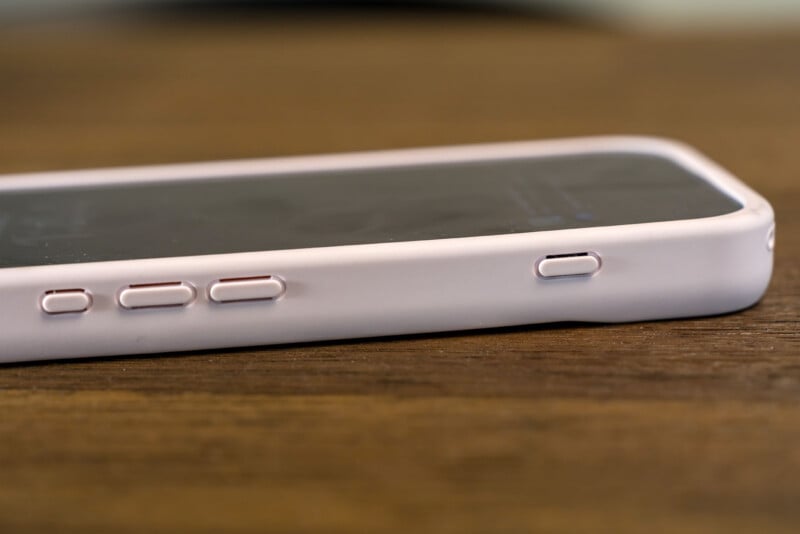
However, even though it’s a case that plugs into the iPhone’s USB-C port, it still has a separate charging port. It doesn’t take a USB-C phone port like the Insta360 Snap Selfie or require frequent charging like the SmallRig Wireless Video Monitor.
Speaking of which, Dockcase builds in some battery-saving technology into this. The screen dims after one minute of inactivity, goes to sleep after five minutes, and turns off completely after 10 minutes. The case tends to get hotter and hotter over time, so I got used to turning it off after I’m done using it.
Selfix supports PD 3.0 and 45W charging. Interestingly, Dockcase calls out some Anker chargers and multi-port chargers that have “compatibility issues due to power protocol flexibility.” So, it recommends using a single USB-C port charger or a non-Anker charger for best performance.
Coming soon
The Morganite Pink Dockcase variant they sent me is clearly the most functional of the three, which include Onyx Black and Satin White. For now, the company will be working on a Kickstarter campaign to fund the initial funding for May 2026 before launching wider sales sometime after that. The case retails for $79 to early adopters with an expected price of $129 to follow.
Freedom: Be sure to do your own research on any crowdfunding project you’re considering supporting. Although we aim to share only legitimate and honest campaigns, there is a possibility that you may lose money when you support any crowdfunding project. PetaPixel does not participate in affiliate programs.
To make projects accountable, all crowdfunding campaigns that PetaPixel reports are funded at the lowest possible rate in order to provide advertising visibility on all supporters’ channels only. If a campaign owner is acting inconsistently with their promises, PetaPixel will share that information publicly.
#Dockcase #Selfix #HandsOn #Case #Replaces #Selfie #Camera